

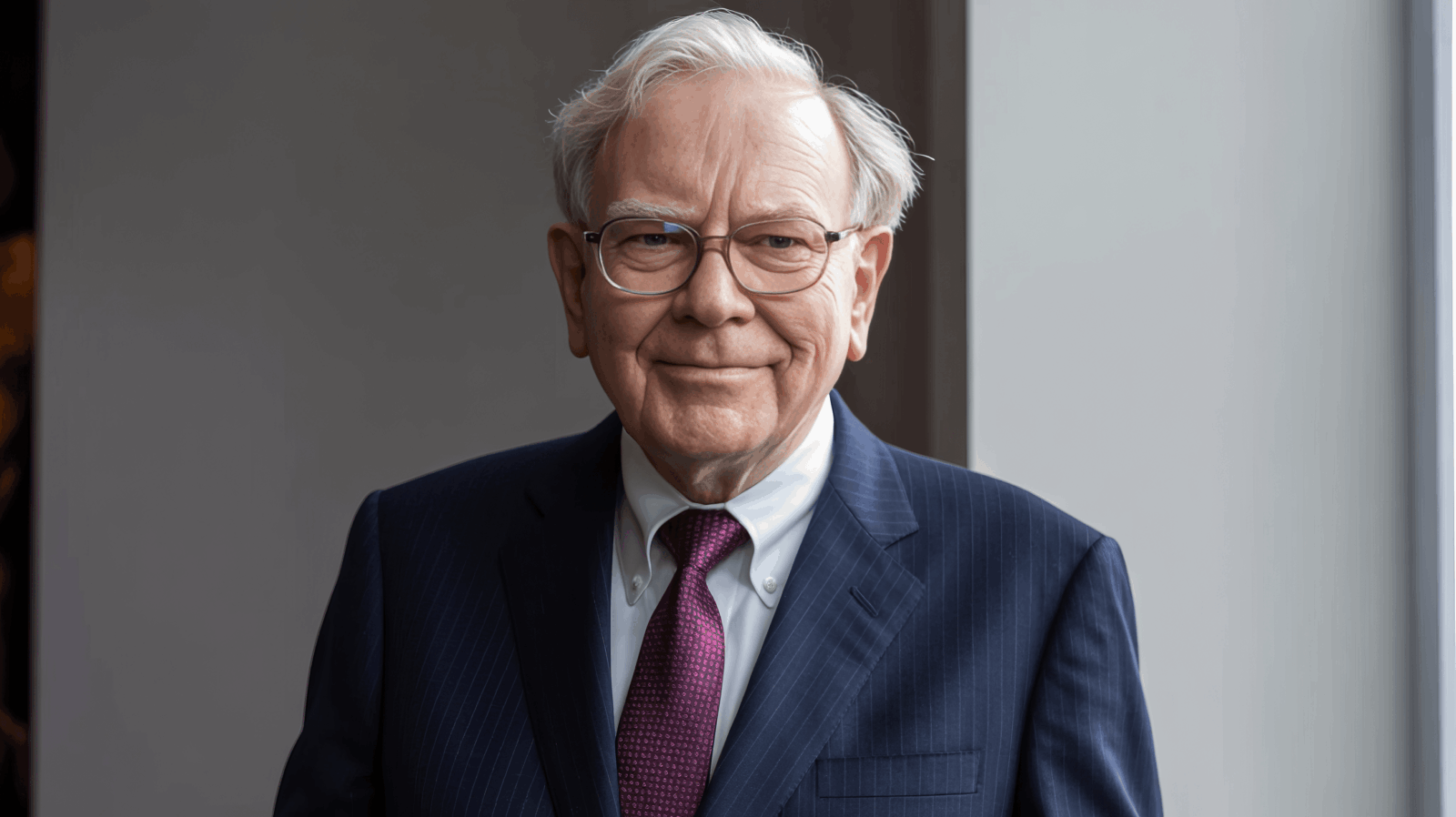
Warren Buffett is one of the most successful and influential investors in modern financial history.
Known around the world as the “Oracle of Omaha,” Buffett spent decades transforming Berkshire Hathaway from a struggling textile company into an enormous business and investment conglomerate with interests spanning insurance, energy, transportation, manufacturing, retail, and major publicly traded companies.
Unlike many of the world’s richest entrepreneurs, Buffett did not build his fortune by creating a revolutionary technology company.
His wealth was largely created through capital allocation.
He identified businesses he believed possessed durable economic advantages, acquired companies outright or purchased significant stock positions, and often held those investments for extraordinarily long periods.
The result was one of the most remarkable examples of long-term wealth creation in business history.
After leading Berkshire Hathaway for more than five decades, Buffett retired as Chief Executive Officer at the end of 2025. Greg Abel officially became Berkshire’s CEO on January 1, 2026, while Buffett remained Chairman of the Board.
Warren Buffett’s Age and Early Life
Warren Edward Buffett was born on August 30, 1930, in Omaha, Nebraska.
His interest in money and business appeared remarkably early.
Buffett was the son of Howard Buffett, a stockbroker who later served as a member of the United States Congress.
As a child, Warren experimented with different ways of earning money, including selling products and delivering newspapers.
His fascination with investing began equally early.
According to Forbes, Buffett purchased his first stock when he was just 11 years old and filed his first tax return at age 13.
These experiences were early indications of an obsession with business, numbers, investing, and compound growth that would define his life.
Education and Benjamin Graham
Buffett attended the University of Nebraska and later studied at Columbia University.
One of the most important influences on his career was legendary investor and professor Benjamin Graham.
Graham was one of the pioneers of value investing.
The basic philosophy was to analyze businesses carefully and attempt to purchase securities for less than their underlying economic value, creating what Graham described as a margin of safety.
Buffett absorbed these principles but eventually developed them further.
Rather than concentrating exclusively on statistically cheap businesses, he increasingly became interested in purchasing exceptional companies capable of generating strong returns over long periods.
That evolution became central to the investment strategy later associated with Berkshire Hathaway.
The Beginning of Buffett’s Investment Career
After completing his education, Buffett worked in investment management and eventually established his own investment partnerships.
His early investment performance helped build his reputation and personal capital.
Buffett was intensely analytical.
He studied financial statements, business economics, management quality, competition, and the price investors were being asked to pay for a company.
But one of his greatest advantages was patience.
Buffett did not believe investors needed to constantly buy and sell securities.
Instead, he believed extraordinary opportunities could justify waiting for long periods and then committing substantial capital when the right investment appeared.
This philosophy would eventually distinguish him from much of Wall Street.
Berkshire Hathaway: From Textile Company to Investment Empire
The company most closely associated with Buffett began as something very different from the modern Berkshire Hathaway.
Berkshire was originally a textile manufacturer.
Buffett began purchasing shares because he believed the stock was undervalued.
He eventually gained control of the business.
The textile operations themselves ultimately proved unsuccessful, and Buffett later acknowledged that buying the textile company was not one of his best business decisions.
But Berkshire Hathaway became the corporate vehicle through which he built his investment empire.
Instead of remaining dependent on textiles, Buffett redirected capital toward businesses with more attractive economics.
Over time, Berkshire evolved into an enormous conglomerate owning businesses across numerous industries.
Why Insurance Became So Important
One of the most important elements in Berkshire Hathaway’s development was insurance.
Insurance companies collect premiums before they eventually have to pay many claims.
The money temporarily held between receiving premiums and paying claims is commonly known as insurance float.
Buffett recognized that responsibly managed insurance operations could provide Berkshire with substantial amounts of capital that could be invested.
This became an extraordinarily important component of Berkshire’s financial model.
The company eventually developed major insurance operations, including Geico, while using its financial strength to invest across many other businesses.
Insurance therefore became much more than another industry in Buffett’s portfolio.
It became one of the engines behind Berkshire’s expansion.
Warren Buffett’s Investment Philosophy
Buffett’s investment philosophy has evolved throughout his career, but several principles became closely associated with his approach.
He focuses heavily on understanding the economics of the business rather than attempting to predict short-term movements in stock prices.
His approach emphasizes:
- Buying understandable businesses
- Looking for durable competitive advantages
- Evaluating management quality
- Maintaining financial discipline
- Avoiding excessive debt
- Paying sensible prices
- Thinking in years and decades rather than days
- Allowing successful investments to compound
- Remaining patient when attractive opportunities are unavailable
- Avoiding emotional reactions to market volatility
This long-term mentality became one of Buffett’s defining characteristics.
Rather than viewing shares primarily as pieces of paper whose prices move every day, his philosophy treats them as ownership interests in actual businesses.
Charlie Munger’s Influence
One of the most important relationships in Buffett’s professional life was his partnership with Charlie Munger.
Munger served for decades as Berkshire Hathaway’s Vice Chairman and became Buffett’s closest business partner.
His influence helped Buffett move beyond the strictest interpretation of Benjamin Graham’s approach.
Munger encouraged a greater focus on purchasing outstanding businesses at reasonable prices rather than simply purchasing mediocre businesses because their stocks appeared extremely cheap.
That distinction had enormous consequences.
It helped Berkshire invest in companies with strong brands, high-quality economics, and significant long-term growth potential.
Munger died in November 2023 at the age of 99, ending one of the longest and most influential partnerships in modern business.
Berkshire Hathaway’s Business Empire
Under Buffett’s leadership, Berkshire Hathaway became far more than an investment portfolio.
The company owns dozens of operating businesses.
Its holdings have included major operations in insurance, railroads, utilities and energy, manufacturing, consumer products, and retail.
Forbes notes that Berkshire owns companies including Geico, Duracell, and Dairy Queen.
Berkshire has also historically invested substantial amounts of capital in publicly traded corporations.
This combination of wholly owned businesses and stock-market investments created a structure unlike that of most major corporations.
Capital generated by one Berkshire subsidiary could be redirected toward opportunities elsewhere within the organization.
The Power of Compound Growth
Compound growth is essential to understanding Warren Buffett’s fortune.
Buffett became enormously wealthy not merely because he generated strong investment returns, but because he allowed capital to compound over exceptionally long periods.
Time was one of his greatest advantages.
He began investing as a child and remained active well into his nineties.
When investment returns are reinvested rather than continually withdrawn, the earnings themselves can begin producing additional earnings.
Repeated across decades, this process can produce extraordinary results.
Buffett’s career became perhaps the world’s most famous real-life demonstration of the power of long-term compounding.
Warren Buffett’s Net Worth
Warren Buffett has ranked among the world’s richest individuals for decades.
Because much of his wealth is connected to Berkshire Hathaway shares, his estimated fortune changes with the company’s market value and with his enormous charitable donations.
Forbes estimated Buffett’s real-time net worth at approximately $140.9 billion as of July 24, 2026, placing him among the ten wealthiest people in the world.
The scale of his fortune becomes even more remarkable when his philanthropy is considered.
Buffett has already donated tens of billions of dollars worth of Berkshire shares.
Forbes estimated in July 2026 that he had given away approximately $68 billion over his lifetime.
Without those donations, his personal fortune would be substantially larger.
A Billionaire Known for a Relatively Modest Lifestyle
One of the most famous aspects of Buffett’s public image is the contrast between his enormous fortune and his relatively modest personal lifestyle.
He has continued living in the Omaha house he purchased in 1958 for $31,500, according to Forbes.
This does not mean Buffett avoids every luxury—he has openly acknowledged enjoying private aviation, for example—but his lifestyle is notably different from the image often associated with extreme billionaire wealth.
For Buffett, accumulating material possessions has never appeared to be the primary purpose of building capital.
That attitude is closely connected with his approach to philanthropy.
Giving Away More Than 99% of His Wealth
Buffett has made one of the largest philanthropic commitments in history.
He has pledged that more than 99% of his wealth will ultimately go to philanthropic purposes.
In his Giving Pledge letter, Buffett explained that retaining a small portion of his wealth was more than sufficient to support his own lifestyle and that the overwhelming majority could have far greater value when directed toward society.
His charitable giving began on a massive scale in 2006 through annual donations of Berkshire Hathaway shares.
For many years, major recipients included the Gates Foundation and foundations associated with his family.
In July 2026, Buffett directed nearly $6 billion in Berkshire shares to four foundations associated with his family, as he continued accelerating plans to distribute his remaining wealth.
Creating the Giving Pledge
In 2010, Buffett joined Bill Gates and Melinda French Gates in launching the Giving Pledge.
The initiative encourages some of the world’s wealthiest individuals and families to commit the majority of their fortunes to philanthropy during their lifetimes or through their estates.
By May 2026, the Giving Pledge had grown to more than 250 signatories from over 30 countries.
Buffett’s influence therefore extends beyond his own charitable donations.
He helped create a movement designed to change how billionaires think about the responsibility attached to enormous private fortunes.
The End of the Buffett CEO Era
One of the most important developments in Berkshire Hathaway’s history occurred at the end of 2025.
After decades at the top of the organization, Buffett stepped down as Chief Executive Officer.
Greg Abel, who had previously overseen Berkshire’s non-insurance businesses, became CEO on January 1, 2026.
Buffett, however, remained Chairman of Berkshire Hathaway’s Board of Directors.
The transition represents one of the most closely watched succession events in modern corporate history.
Berkshire’s challenge is not simply replacing a chief executive.
It is preserving a culture of decentralized management, disciplined capital allocation, financial strength, and long-term thinking that developed under Buffett over more than half a century.
Warren Buffett at 95
By 2026, Buffett was 95 years old and remained closely associated with Berkshire Hathaway despite handing day-to-day chief executive responsibilities to Greg Abel.
His extraordinary longevity has become an important part of his story.
Few major business leaders have remained intellectually and professionally active across such an enormous period of economic history.
Buffett’s career has stretched across recessions, inflationary periods, financial crises, technological revolutions, wars, market crashes, and enormous changes in the structure of the global economy.
Yet the central principles of his investment philosophy remained remarkably consistent.
Key Achievements
Warren Buffett’s major achievements include:
- Transforming Berkshire Hathaway into a global business conglomerate
- Becoming one of the most successful investors in history
- Building a fortune exceeding $100 billion despite massive charitable giving
- Developing one of the world’s most influential long-term investment philosophies
- Using insurance operations as a powerful source of investment capital
- Building a decentralized collection of major operating businesses
- Maintaining one of the longest leadership tenures in modern corporate history
- Creating the Giving Pledge with Bill Gates and Melinda French Gates
- Committing more than 99% of his fortune to philanthropy
- Donating tens of billions of dollars during his lifetime
- Establishing a carefully planned leadership transition at Berkshire Hathaway
Final Thoughts
Warren Buffett’s story is not primarily about getting rich by predicting which stock will rise next.
It is about understanding businesses, allocating capital intelligently, controlling emotion, exercising patience, and allowing time to magnify good decisions.
That distinction explains why his influence extends far beyond his personal fortune.
Generations of investors, executives, entrepreneurs, and students have studied his shareholder letters, investment decisions, acquisitions, and public comments in an attempt to understand the principles behind Berkshire Hathaway’s success.
His career also demonstrates the extraordinary effect of combining strong investment returns with an exceptionally long time horizon.
But Buffett’s legacy will ultimately involve more than investment performance.
By committing more than 99% of his wealth to philanthropy and helping create the Giving Pledge, he has attempted to ensure that the fortune generated through decades of investing eventually returns to society.
With Greg Abel taking over as Berkshire Hathaway’s Chief Executive Officer in 2026, one era has begun to close.
The next test will be whether the culture and investment principles Warren Buffett spent more than half a century building can continue without him as chief executive.
Whatever the answer, Buffett has already secured a unique place in business history—not merely as one of the world’s richest people, but as the investor who turned patience, discipline, rationality, and compound growth into one of the greatest fortunes ever created.