


The wreck of a 40-meter merchant vessel has become a “submerged archive,” revealing historic trade networks linking East Asia, the Indian Ocean and Red Sea ports
Archaeological treasures recovered from a shipwreck off the coast of Umluj are shedding new light on centuries of maritime trade across the Red Sea, with Chinese porcelain, earthenware jars and other artifacts offering tangible evidence of extensive commercial networks that once connected distant regions and ports.
A selection of discoveries from the site is featured in the “Sunken Treasures: The Maritime Heritage of the Red Sea” exhibition at the Red Sea Museum in Jeddah, where archaeological research is combined with historical storytelling to trace the vessel’s transformation from a merchant ship into an underwater archaeological site and natural coral habitat.
A 40-Meter Vessel Beneath the Red Sea
The wrecked vessel measures approximately 40 meters in length and is believed to have struck coral reefs off the coast of Umluj before sinking to a depth of around 22 meters.
The site was discovered in 2007, while archaeological excavations began in 2015, gradually uncovering artifacts that provide researchers with valuable insights into the cargo carried by merchant vessels and the maritime trade routes that once crossed the region.
Over time, sediment covered parts of the wreck while coral grew around it, transforming the site into a unique combination of submerged cultural heritage and natural marine habitat.
Chinese Porcelain Reveals Historic Trade Routes
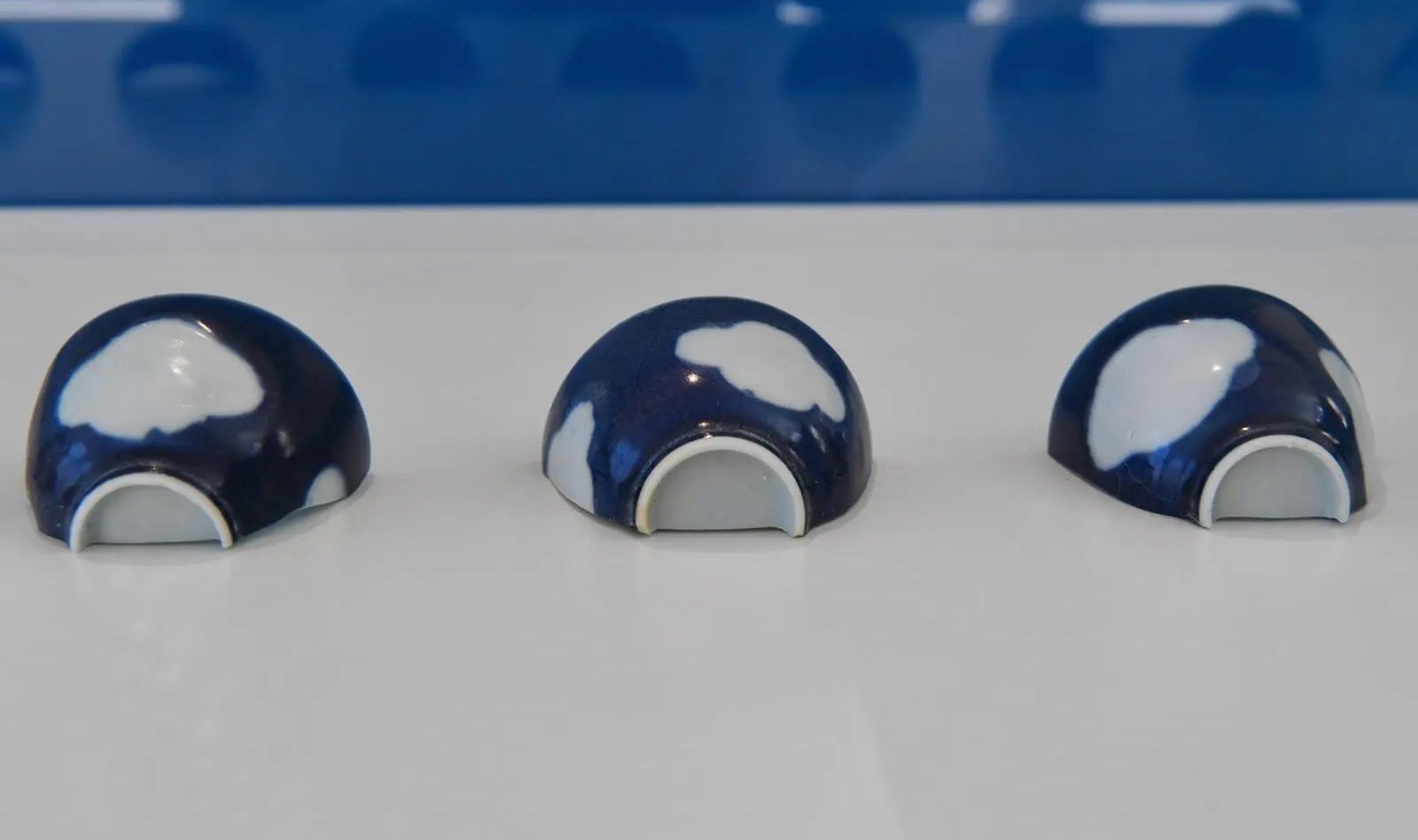
Researchers discovered earthenware jars, Chinese porcelain and other artifacts that formed part of the vessel’s commercial cargo.
The finds reflect the reach of trade networks connecting East Asia and the Indian Ocean with Red Sea ports during the 18th and 19th centuries, offering physical evidence of the region’s role in international commercial and cultural exchange.
Comparisons between the artifacts and ceramics recovered from other historic shipwrecks have also helped researchers deepen their understanding of maritime trade during the period.
134 Nearly Complete Cups and 479 Ceramic Fragments
Among the most significant discoveries were 134 nearly complete cups and 479 ceramic fragments.
The collection includes monochrome and blue-glazed cups, Batavia cups historically associated with Dutch East India Company trade, and blue-and-white Chinese Qinghua porcelain.
The Qinghua pieces feature floral, natural and symbolic decorations, including peony and bamboo motifs as well as the “flaming wheel” pattern, giving the collection artistic significance alongside its archaeological and commercial importance.
From Merchant Vessel to Coral Habitat
The ship’s story did not end when it sank. Over the years, marine sediment accumulated across the wreck while coral formations developed around it.
The site now combines archaeological value as evidence of historic Red Sea navigation and trade with environmental significance as part of the surrounding marine ecosystem.
Through an interactive experience, the exhibition highlights the importance of protecting submerged archaeological sites and preserving them for future generations.
A ‘Submerged Archive’ of Red Sea History
The Umluj shipwreck is presented as a “submerged archive” that preserves traces of the people who once sailed the Red Sea and the goods they transported between ports.
Each artifact recovered from the wreck provides another piece of evidence about the economic and commercial life of the period while emphasizing maritime heritage as an important part of Saudi Arabia’s broader cultural legacy.
Umluj’s Historic Role in Maritime Trade
Umluj historically served as an important maritime trading link between the Arabian Peninsula and Africa, adding further significance to the archaeological discoveries made off its coast.
The coastal governorate is also home to more than 100 islands, extensive coral reefs and diverse marine wildlife, including green and hawksbill turtles, dolphins, dugongs and migratory birds.
These natural attractions complement the region’s maritime history as efforts continue to promote sustainable coastal tourism across the Red Sea.
Connecting Archaeological Research With Public Storytelling
Developed in cooperation with the Heritage Commission, the “Sunken Treasures: The Maritime Heritage of the Red Sea” exhibition uses modern museum techniques to connect scientific research and archaeological discoveries with accessible historical storytelling.
Through the treasures recovered from the Umluj shipwreck, the exhibition offers visitors a window into the Red Sea’s centuries-old role as a vital corridor for trade and cultural exchange — bringing stories hidden beneath its waters back to the surface.