

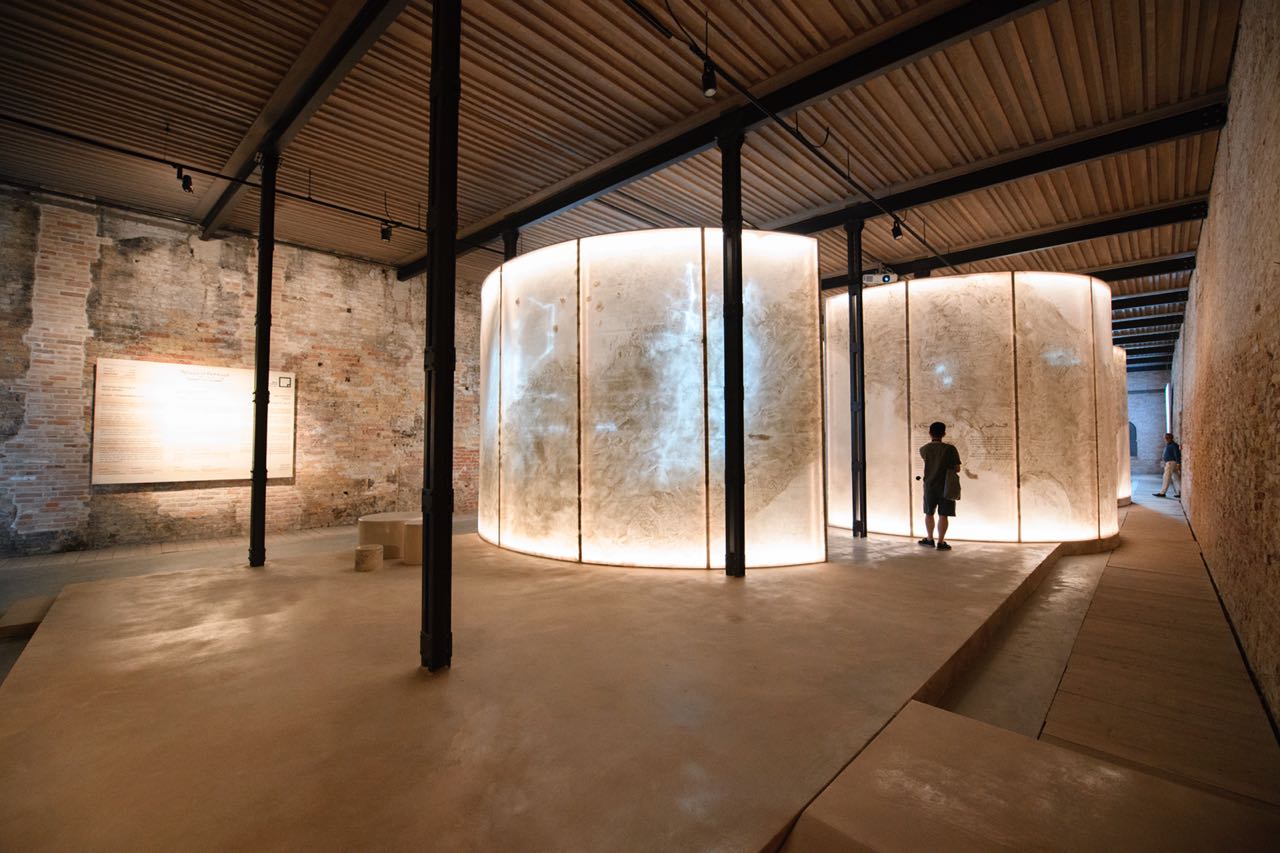
Saudi Arabia has unveiled a large-scale artistic installation at the Venice Biennale, where artist Dana Awartani presented a powerful work inspired by Islamic geometry and traditional craftsmanship, exploring themes of memory, loss, and cultural continuity.
This marks the Kingdom’s fifth participation in one of the world’s most prestigious contemporary art exhibitions, held in Venice.
A Work Rooted in Memory and Identity
Titled “May your tears never dry, you who weep over stones,” the installation spans the entire floor of the Saudi pavilion at the historic Arsenale venue.
The artwork draws from traditional Islamic mosaic patterns and architectural heritage across the Arab world, creating a visual reflection on damaged and endangered cultural sites.
Inspired by Threatened Heritage Sites
Awartani’s work references 23 internationally recognized heritage sites affected by conflict and destruction in recent years.
Through interconnected patterns and handcrafted textures, the installation highlights the shared cultural history of the Arab region and the resilience of its identity despite loss and fragmentation.
Thousands of Hours of Traditional Craftsmanship
The project was produced through nearly 30,000 hours of artisan work involving 32 craftsmen in a studio near Riyadh.
More than 29,000 handmade clay bricks were created using natural Saudi earth without chemical materials, emphasizing authenticity, raw craftsmanship, and traditional building methods.
Expanding Saudi Arabia’s Global Cultural Presence
Dina Amin stated that the Saudi pavilion continues to serve as a global platform for Saudi artistic voices while connecting local visual arts with international cultural dialogue.
The participation reflects Saudi Arabia’s growing investment in creative industries and its ambition to become a major regional arts hub.
Art as a Bridge Between Past and Future
Beyond its visual impact, the installation raises profound questions about heritage preservation, identity, and collective memory, demonstrating how art can transform destruction into a universal human narrative.