

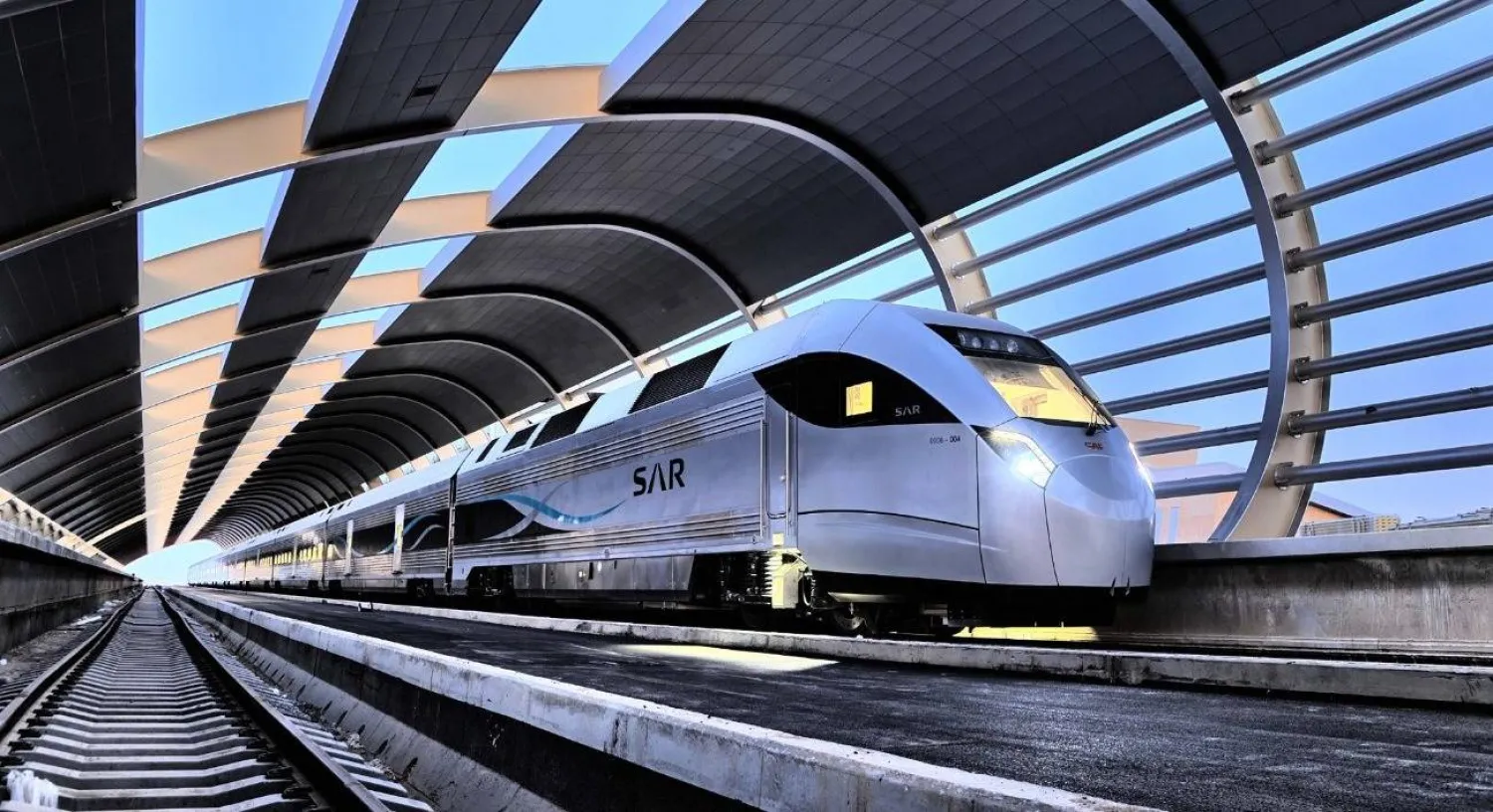
Saudi Arabia Railways (SAR) announced on Tuesday the launch of five new freight rail corridors connecting the Kingdom’s key industrial zones, ports, and cities, a move designed to sharply cut cargo costs, reduce dependence on road transport, and accelerate the country’s push to become a leading regional logistics hub.
Five Corridors, One Strategic Vision
The new routes span the Kingdom’s most commercially vital territories. The Eastern Corridor links Dammam, the industrial heart of the Eastern Province, with Riyadh, providing a dedicated lane for the movement of petrochemicals and containerized goods that fuel the Kingdom’s export economy. The Red Sea Corridor connects Jeddah, home to the country’s busiest seaport, directly to the capital, opening a reliable alternative for trade flowing through the western coast.
Further south, the Southern Corridor extends the network to Jazan Economic City, channeling agricultural produce, minerals, and manufactured goods from the region’s growing industrial base toward central Saudi Arabia. The Northern Corridor ties Tabuk to Riyadh, unlocking faster transit for raw materials originating in the Kingdom’s northern territories. Completing the network, the Western Corridor brings Mecca and Jeddah closer in terms of freight movement, improving efficiency within the Kingdom’s most densely connected urban zone.
Cutting Costs, Attracting Investment
The expansion directly addresses a challenge that businesses across Saudi Arabia have long cited: the high cost of domestic logistics in a country of vast geographic scale. By shifting more cargo from road to rail, the initiative is expected to lower freight costs across sectors ranging from energy and petrochemicals to consumer goods and industrial manufacturing. Lower logistics costs, in turn, are expected to improve the competitiveness of Saudi exports and create more favorable conditions for foreign investors evaluating the Kingdom as a manufacturing and trade base.
Saudi Arabia’s geographic position as a land bridge between Asia and Europe gives its logistics infrastructure a strategic dimension that extends well beyond domestic commerce. SAR has outlined plans to eventually extend its rail network into neighboring countries, opening corridors for regional trade integration that support Vision 2030’s economic diversification goals.
Building a Greener Network
The rail expansion also addresses environmental commitments. Rail freight produces significantly lower carbon emissions per ton compared to road transport, and SAR has indicated the new corridors will be powered in part by renewable energy, consistent with the Kingdom’s sustainability targets and its ambition to reduce carbon intensity across the transportation sector.
The announcement marks one of the most significant expansions of the Kingdom’s freight rail infrastructure in recent years and underscores the scale of investment flowing into transportation as part of Vision 2030.