


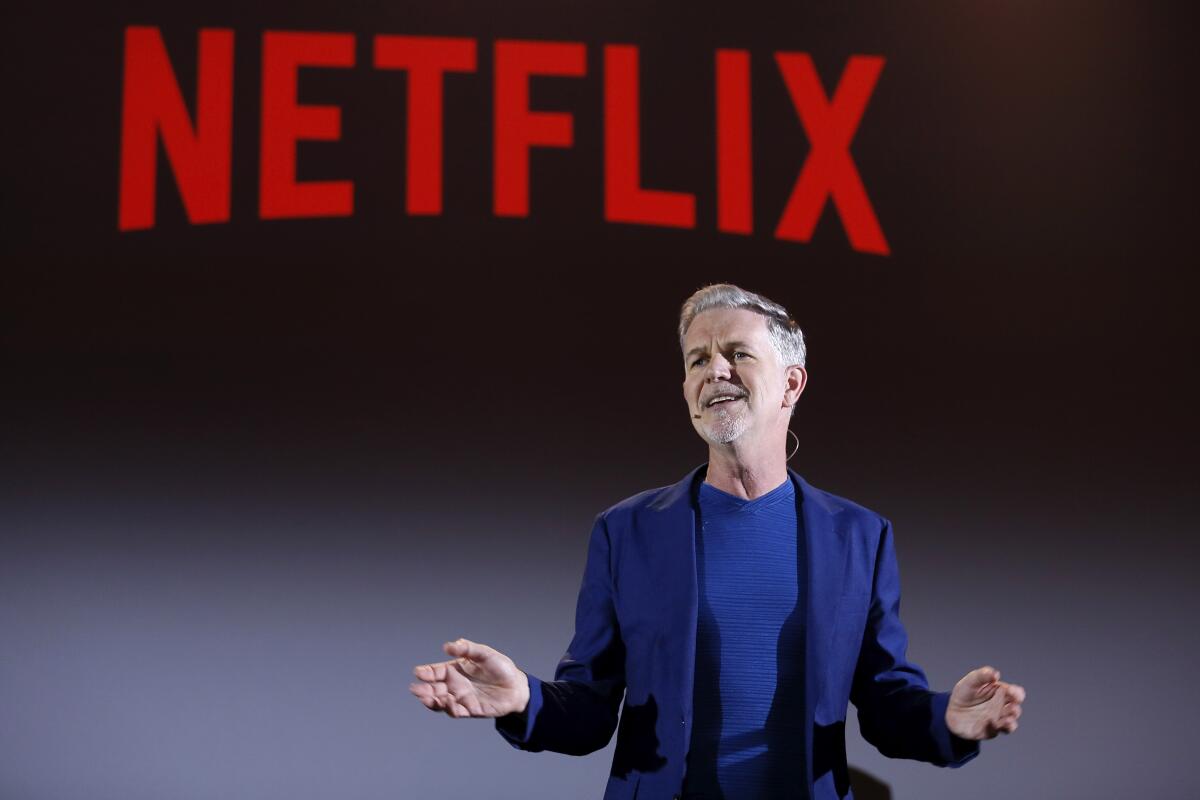
Reed Hastings is one of the most influential entrepreneurs in the history of digital entertainment. Best known as the co-founder of Netflix, Hastings helped transform how millions of people around the world watch movies, television series, documentaries, and other forms of entertainment.
His career is closely associated with one of the most significant disruptions in the modern media industry. Netflix evolved from a DVD-by-mail subscription business into a global streaming company that fundamentally challenged traditional television networks, movie rental businesses, and established entertainment distribution models.
Hastings co-founded Netflix in 1997, and the company went public in 2002. It later introduced streaming in 2007, a move that would ultimately redefine its business and help accelerate the global shift toward on-demand entertainment.
Reed Hastings Age and Early Life
Wilmot Reed Hastings Jr. was born on October 8, 1960, in Boston, Massachusetts, United States.
Long before entering the entertainment industry, Hastings developed interests in mathematics, technology, and problem-solving.
His academic and professional journey eventually led him toward computer science and software development, areas that would provide the technical foundation for his entrepreneurial career.
Unlike traditional Hollywood executives, Hastings approached entertainment from a technology and business-model perspective. This difference would later become crucial to Netflix’s success.

Education and Technology Background
Reed Hastings attended Bowdoin College before pursuing graduate studies at Stanford University.
He earned a graduate degree in artificial intelligence from Stanford, giving him a strong technical foundation at a time when computing technologies were beginning to transform businesses around the world.
His education helped shape an analytical approach to entrepreneurship that emphasized technology, experimentation, data, and scalable business models.
Before Netflix, Hastings founded Pure Software, a company focused on tools for software developers.
The experience of building and managing Pure Software gave him valuable lessons in leadership, corporate culture, and the challenges associated with rapidly growing organizations.
Founding Netflix
In 1997, Reed Hastings co-founded Netflix with Marc Randolph.
The company initially operated as a DVD rental service, eventually developing a subscription model that allowed customers to receive DVDs through the mail.
This approach offered an alternative to traditional video rental stores and helped eliminate many of the inconveniences associated with physical rental locations.
Netflix’s business model gained popularity, and the company went public in 2002.
However, the company’s most important transformation was still ahead.
From DVD Rentals to Streaming
In 2007, Netflix began offering streaming content.
The decision represented a major strategic shift.
Instead of depending entirely on physical DVDs, Netflix began allowing customers to watch entertainment directly over the internet.
As broadband internet became faster and more widely available, streaming rapidly grew in popularity.
Netflix eventually placed streaming at the center of its business model, helping change consumer expectations around television and entertainment.
Audiences no longer needed to wait for scheduled broadcasts or visit physical rental stores. They could increasingly choose what they wanted to watch and when they wanted to watch it.
This transition became one of the most important transformations in modern entertainment.
Building a Global Entertainment Company
Netflix eventually expanded internationally and invested heavily in original programming.
The company moved beyond distributing content created by traditional studios and became a major producer of its own films, television series, documentaries, and other entertainment.
This strategy intensified competition between streaming services and traditional media companies.
Netflix’s global growth also demonstrated how technology platforms could distribute entertainment across international markets at an unprecedented scale.
Under Hastings’ long leadership, the company evolved from a relatively simple rental business into one of the most recognizable names in global entertainment.
Leadership Style and Netflix’s Corporate Culture
Reed Hastings became particularly well known for his unconventional approach to corporate culture.
His leadership philosophy emphasized employee independence, responsibility, transparency, and giving talented employees significant freedom to make decisions.
Rather than relying heavily on traditional corporate rules and micromanagement, Hastings advocated creating an environment where employees understood the company’s objectives and were trusted to make effective decisions.
This philosophy became one of the most discussed aspects of Netflix’s management culture.
It also influenced broader conversations about how technology companies can manage creative and highly skilled teams.
Reed Hastings Net Worth
Reed Hastings became a billionaire largely through his connection to Netflix and the growth of the company’s value.
However, his estimated wealth can change significantly based on stock prices, share sales, and other assets.
As of July 15, 2026, Forbes’ real-time profile estimated his net worth at approximately $4.3 billion and noted that he owned less than one percent of Netflix shares. Because real-time wealth estimates fluctuate, the figure should be treated as an estimate rather than a fixed value.

Stepping Away From Netflix Leadership
After approximately 25 years leading Netflix, Hastings stepped down from his co-chief executive role in 2023.
He subsequently remained involved at the board level, but his role continued to evolve.
In April 2026, it was announced that Hastings would step away from his Netflix board position in June to focus more of his attention on philanthropy and other pursuits.
His departure from the board marked another important transition in the history of the company he helped create.
Even as his formal leadership role came to an end, his influence remained deeply embedded in Netflix’s business model and corporate culture.
Philanthropy and Education
Beyond technology and entertainment, Reed Hastings has devoted significant attention to education and philanthropy.
He has supported educational initiatives and institutions through major charitable contributions.
In 2025, for example, Forbes reported that Hastings donated $50 million to Bowdoin College to establish a new artificial intelligence institute, describing it as the largest gift in the institution’s history at the time.
His philanthropic interests reflect a long-standing focus on education and the potential role of technology in shaping future learning.
Key Achievements
Reed Hastings’ major achievements include:
- Co-founding Netflix in 1997
- Helping pioneer the DVD-by-mail subscription model
- Leading Netflix’s transition into internet streaming
- Building Netflix into a major global entertainment company
- Helping reshape how audiences consume movies and television
- Developing one of the technology industry’s most widely discussed corporate cultures
- Supporting major educational and philanthropic initiatives
Few entrepreneurs have had such a significant impact on both technology and entertainment.
Final Thoughts
Reed Hastings represents one of the most important entrepreneurial stories of the digital era.
His journey demonstrates how a company can survive major technological disruption by being willing to transform its own successful business model before competitors force it to change.
From mailing DVDs to customers to helping build a global streaming business, Hastings played a central role in changing how entertainment reaches audiences around the world.
His legacy extends beyond Netflix itself. It can be seen in the global rise of streaming, the decline of traditional video rental models, the growing influence of technology companies in entertainment, and the increasing expectation that audiences should be able to watch content whenever and wherever they choose.
The story of Reed Hastings is ultimately a story of adaptation: recognizing that technology would change entertainment and choosing to lead that transformation rather than resist it.