

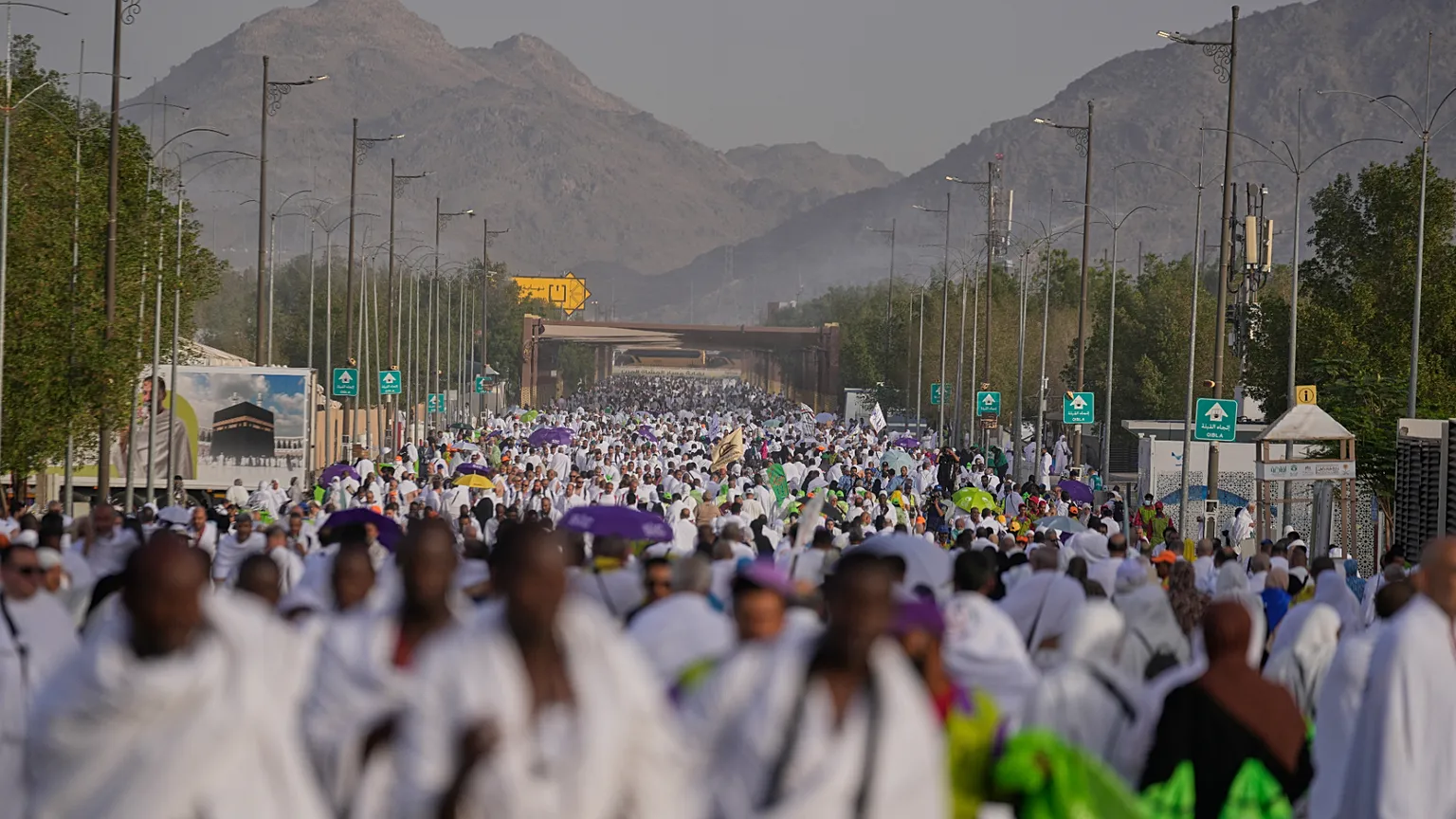
Hajj and Umrah represent some of the world’s largest religious gatherings, requiring extensive systems for crowd management, transportation, healthcare, security and accommodation. In 2026, Saudi Arabia continued to expand and modernize the infrastructure and digital services supporting pilgrims, with a growing focus on safety, operational efficiency and overall visitor experience.
Official statistics for the 2026 Hajj season show the scale of the operation. A total of 1,707,301 pilgrims performed Hajj, including 1,546,655 international pilgrims and 160,646 pilgrims from within Saudi Arabia.
The figures demonstrate both the global significance of Hajj and the scale of the infrastructure and operational systems required to serve millions of visitors within a limited geographical area and timeframe.
More Than 1.7 Million Pilgrims in 2026
According to data from the General Authority for Statistics, the number of pilgrims during the 2026 Hajj season exceeded 1.7 million.
International pilgrims represented the majority, with 1,546,655 arriving from outside the Kingdom, while 160,646 pilgrims came from within Saudi Arabia.
The distribution highlights the international character of Hajj, which brings together Muslims from a wide range of countries and cultures within a concentrated period.
| Indicator | Value | Source |
|---|---|---|
| Total pilgrims | 1,707,301 | GASTAT |
| International pilgrims | 1,546,655 | GASTAT |
| Domestic pilgrims | 160,646 | GASTAT |
| Male pilgrims | 52.3% | GASTAT |
| Female pilgrims | 47.7% | GASTAT |
| Pilgrims by air | 96.1% | DataSaudi |
| Pilgrims by road | 3.5% | DataSaudi |
| Pilgrims by sea | 0.4% | DataSaudi |
| Nationalities represented | 165 | GASTAT |
| Hajj workforce | 441,049 | GASTAT |
A Nearly Balanced Gender Distribution
The statistics also show a relatively balanced gender distribution among pilgrims.
Male pilgrims numbered 893,396, while female pilgrims totaled 813,905.
The figures demonstrate the broad participation of women in the annual Hajj season.
| Indicator | Value | Source |
|---|---|---|
| Male pilgrims | 893,396 | GASTAT |
| Female pilgrims | 813,905 | GASTAT |
| Increase in female participation since 2019 | 3.3 points | GASTAT |
Arrival and Transportation Pilgrims’ arrival statistics show that air travel was the predominant mode of transportation, with 1,485,729 pilgrims arriving by air. Road and sea arrivals were considerably lower, with 54,429 and 6,497 pilgrims respectively. These figures underscore the importance of air travel infrastructure in supporting the Hajj.
| Indicator | Value | Source |
|---|---|---|
| Arrived by air | 1,485,729 | GASTAT |
| Arrived by road | 54,429 | GASTAT |
| Arrived by sea | 6,497 | GASTAT |
Workforce and Volunteers The Hajj season was supported by a workforce of 441,049, as reported by GASTAT. The number of volunteers varied, with GASTAT noting 26,701 volunteers, while the NCNP reported over 39,000 volunteers. This large workforce was essential in managing the logistics and ensuring the smooth conduct of the pilgrimage.
| Indicator | Value | Source |
|---|---|---|
| Hajj workforce | 441,049 | GASTAT |
| Volunteers (GASTAT) | 26,701 | GASTAT |
| Volunteers (NCNP) | 39,000+ | Arab News |
Health and Safety Measures Health and safety were prioritized during the Hajj season. Despite high temperatures ranging between 40.5°C and 42°C, the Ministry of Health declared the season free of epidemic outbreaks. Additionally, individual countries reported their own mortality figures, with Bangladesh confirming 54 deaths and Indonesia around 130 deaths.
| Indicator | Value | Source |
|---|---|---|
| Temperature range | 40.5°C – 42°C | Vision 2030 |
| Bangladesh reported deaths | 54 | Vision 2030 |
| Indonesia reported deaths | 130 | Vision 2030 |
Sources: GASTAT, Vision 2030, DataSaudi, Arab News, Türkiye Today, Saudi Gazette.
Image source: taqwatours.co.uk