


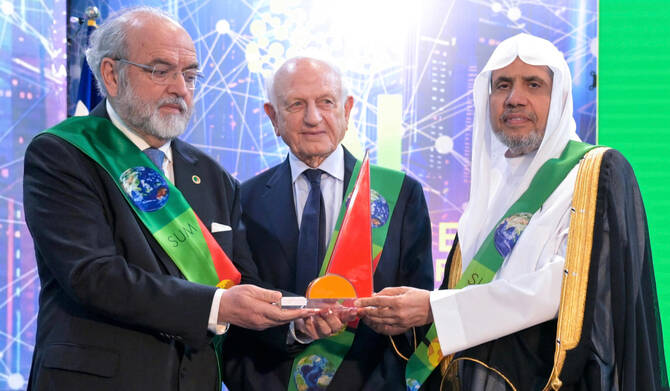
Held under the patronage of King Mohammed VI, the event brought together more than 2,000 participants from 75 countries, including academics, policymakers, and global experts, to address the profound transformations driven by rapid advancements in AI.
Among the prominent speakers was Dr. Mohammed Al-Issa of the Muslim World League, alongside international figures such as Miguel Moratinos.
In its final statement, the conference described AI as a major opportunity to advance human progress, while emphasizing that its development must be guided by universal values, fairness, and respect for human dignity.
Participants highlighted the need for governance frameworks built on transparency, accountability, responsibility, and explainability to enhance public trust in AI systems.
They also warned about challenges related to algorithmic bias and data quality, calling for flexible international regulatory frameworks capable of evolving alongside technological advancements.
The discussions underscored AI’s growing role in sectors such as healthcare, while stressing the importance of ensuring data protection and scientific reliability.
Speakers emphasized that trust in AI systems depends on robust evaluation, auditing, and oversight mechanisms, as well as the adoption of human-centered approaches.
The conference further positioned AI as a strategic tool in international relations, urging stronger multilateral cooperation to prevent technological fragmentation and inequality between nations.
Concerns were also raised regarding cybersecurity threats, misinformation, and hate speech, with calls for effective monitoring, early warning systems, and rapid response strategies.
Participants stressed the importance of developing AI models that respect cultural and linguistic diversity, enhance digital sovereignty, and ensure equitable access to technology.
They also highlighted the need for sustained investment in youth, human capital, and infrastructure to build an inclusive and responsible digital future.
The “Fez Message” concluded with a call to harness AI in support of peace, sustainable development, and greater understanding between cultures and civilizations.
The conference featured multiple plenary and parallel sessions covering global governance, healthcare applications, ethical frameworks, cybersecurity, smart cities, and future infrastructure, providing a vital platform for international dialogue on the evolving role of AI in shaping the world.