


Amancio Ortega is one of the most successful entrepreneurs in the history of global retail, yet he has spent much of his life avoiding the publicity normally associated with billionaire founders.
The Spanish businessman built his fortune through fashion, transforming a small clothing operation into Inditex, the global retail group best known for Zara.
His achievement was not simply creating another popular clothing brand.
Ortega helped develop a business model capable of moving fashion from design to stores with unusual speed, responding rapidly to customer demand and continuously refreshing products.
That philosophy helped change the economics of fashion retail and contributed to the rise of what became widely known as fast fashion.
Today, Ortega remains the controlling shareholder of Inditex, while his fortune has expanded far beyond clothing into one of the world’s most valuable private real-estate portfolios.
As of July 26, 2026, Forbes estimated his fortune at approximately $137.7 billion, making him the 11th-richest person in the world.
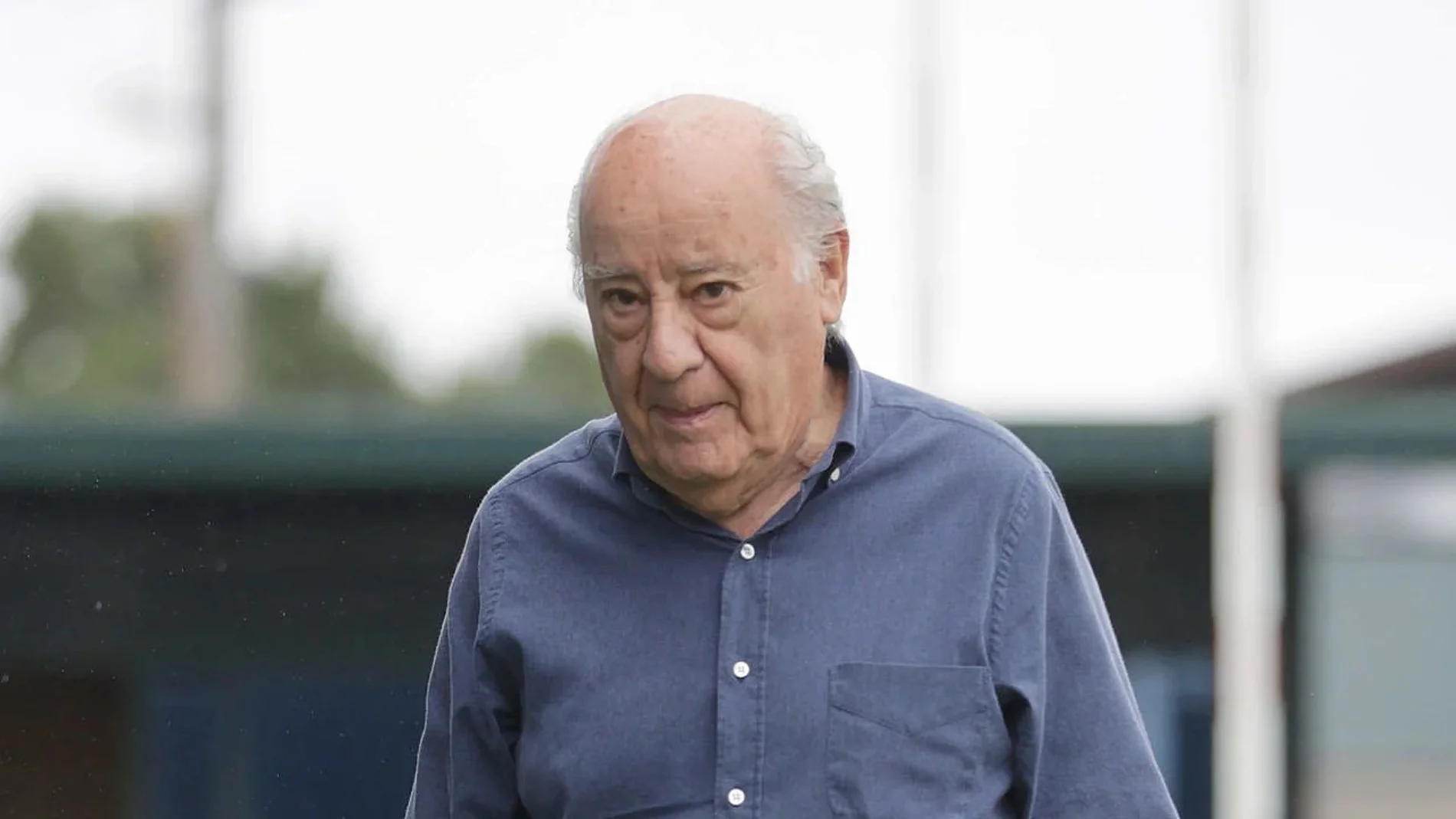
Amancio Ortega’s Age and Early Life
Amancio Ortega Gaona was born on March 28, 1936, in Spain.
His beginnings were dramatically different from the billionaire lifestyle his fortune could support today.
Ortega grew up in a working-class family. His father worked on the railway, and financial limitations shaped his early years.
Rather than following a long academic path, Ortega entered the workforce while still young.
He began learning the clothing business from the inside, gaining experience related to garments, manufacturing, customers, and distribution.
This practical education would eventually become more important to his entrepreneurial career than formal business training.
Ortega learned how clothing was produced, how retailers operated, what customers wanted, and where inefficiencies existed between manufacturing and the final sale.
Those lessons eventually helped form the foundation of a radically different retail system.
Entering Textile Manufacturing
Ortega’s entrepreneurial story began before Zara existed.
According to Inditex’s corporate history, he began textile manufacturing activities in 1963.
His early business focused on producing garments rather than building a global network of glamorous fashion stores.
In 1972, he established Confecciones Goa, which became the first garment-making factory in what would eventually develop into the Inditex organization.
The name “Goa” was formed by reversing Ortega’s initials.
This manufacturing background is important to understanding his later success.
Ortega did not approach fashion only from the perspective of branding or design.
He understood production.
And by understanding both manufacturing and retail, he could begin thinking about how the entire process could be reorganized.
The First Zara Store
The breakthrough came in 1975.
Ortega established Zara España, the first retail and distribution company that would become part of the future Inditex group.
The first Zara store opened in A Coruña in northwestern Spain.
The concept would eventually become enormously influential.
Traditional fashion businesses often operated around relatively long cycles.
Collections could be designed far in advance, produced in large quantities, distributed to retailers, and then sold over a season.
That structure created risk.
If a company misunderstood what customers wanted, it could be left with large amounts of unwanted inventory.
Ortega’s emerging model approached the problem differently.
Instead of trying to predict consumer preferences far into the future, the company developed a system designed to observe what customers were actually buying and respond quickly.
The Business Model That Changed Fashion
The central idea behind Zara’s rise was speed combined with customer information.
Stores were not simply places where finished collections were sold.
They became sources of information.
What were customers buying?
Which items were being ignored?
What styles, fabrics, and colors were attracting attention?
What were shoppers asking store employees to find?
Information from the retail network could help influence decisions throughout the organization.
The company then built a supply chain capable of responding to changing demand more rapidly than many traditional competitors.
This reduced dependence on long-range forecasting and allowed Zara stores to refresh their offerings frequently.
Customers had a reason to visit repeatedly because the selection could change quickly.
The model became one of the most studied systems in global retail.
From Zara to Inditex
Zara eventually became the foundation of something much larger.
Inditex developed into a multi-brand global fashion group.
Its portfolio expanded beyond Zara to include brands and concepts such as Pull&Bear, Massimo Dutti, Bershka, Stradivarius, Oysho and Zara Home.
The group describes customer responsiveness, operational agility and disciplined spending as central elements of its model.
That philosophy still reflects the principles Ortega established decades earlier.
By 2025, Inditex was generating €39.9 billion in annual revenue, an increase of 3.2% from the previous year, while net profit reached €6.2 billion.
Those figures demonstrate the extraordinary scale reached by a business whose foundations were laid in a small Spanish textile operation.
Why Zara Became So Successful
Zara’s competitive advantage was never based on one single factor.
Instead, several elements reinforced one another.
The company developed close connections between stores, designers, manufacturing, logistics and management.
It maintained the flexibility to react to customer behavior.
It continually introduced new products.
And it built a shopping experience where scarcity could create urgency.
If customers believed an item might disappear quickly, delaying a purchase carried the risk that it would no longer be available later.
That dynamic differed from retailers built around large quantities of standardized merchandise remaining on shelves for long periods.
Zara also benefited from controlling important parts of its supply chain.
The result was a fashion organization capable of learning and reacting at unusual speed.
Global Expansion
Once the model proved successful in Spain, international expansion followed.
Zara entered additional European markets before moving deeper into the Americas, Asia and other regions.
The company’s stores increasingly appeared in prominent shopping districts and major commercial locations.
This was strategically important.
Rather than relying exclusively on enormous traditional advertising budgets, physical stores themselves could function as highly visible marketing assets.
Premium retail locations strengthened Zara’s image while placing the brand directly in front of large numbers of consumers.
Over time, Inditex developed a vast international presence, while digital commerce added another channel through which its brands could reach customers.
The company now combines physical stores with extensive online operations.
Ortega’s Unusual Approach to Publicity
Despite building one of the largest fortunes in Europe, Amancio Ortega became famous for avoiding celebrity.
He rarely gives interviews and has historically maintained a much lower public profile than entrepreneurs such as Elon Musk, Richard Branson, or Mark Zuckerberg.
This privacy has become part of his public identity.
Forbes quotes Ortega as saying that, on the street, he only wants to be recognized by his family, friends, and the people he works with.
The contrast is striking.
Zara is recognized globally.
Its founder is among the richest people alive.
Yet Ortega has spent decades trying to keep his personal life relatively separate from the international celebrity surrounding extreme wealth.
Stepping Away From Inditex Leadership
Ortega did not remain chairman forever.
He served as Inditex’s chairman until July 2011, when Pablo Isla succeeded him in the role. Ortega remained associated with the company as its founder and controlling shareholder.
This transition was significant because Inditex had to demonstrate that the organization could continue growing without its founder managing the company day to day.
It did.
The group’s continued expansion demonstrated that Ortega had built more than a founder-dependent business.
He had helped create an operating culture and organizational system capable of surviving leadership transitions.
Marta Ortega and the Next Generation
The Ortega family remains closely connected to Inditex.
In April 2022, Amancio Ortega’s daughter, Marta Ortega Pérez, became chairwoman of the company.
The appointment represented an important generational transition.
Inditex had spent years developing its succession structure, with Marta Ortega assuming the chair while Óscar García Maceiras served as chief executive.
The arrangement places the founder’s family at the top of the company’s governance structure without returning to the model in which Amancio Ortega personally managed daily operations.
It also strengthens the possibility that family influence over the business will continue for another generation.
Amancio Ortega’s Ownership of Inditex
One reason Ortega remains extraordinarily wealthy is simple: he retained a massive ownership position in the company he built.
Forbes estimates that he owns approximately 60% of publicly traded Inditex.
This is enormously important.
Many founders gradually sell large portions of their companies as businesses grow.
Ortega maintained control over a majority economic stake in one of the world’s largest fashion retailers.
As Inditex increased in value, so did his fortune.
The ownership also generates enormous dividend income.
Those dividends became the foundation for the second major part of Ortega’s empire.
From Fashion Billionaire to Real Estate Tycoon
Amancio Ortega did not simply spend the cash generated by his Inditex ownership.
He reinvested enormous amounts of it.
Much of that capital flowed into real estate through his family investment structure, Pontegadea.
Forbes says Ortega receives more than $400 million in dividends annually and reinvests much of that money in real estate across Europe and North America.
Over the years, this strategy created a remarkable second fortune alongside his Inditex stake.
Rather than investing only in fashion companies, Ortega accumulated high-quality physical assets capable of generating rental income.
His portfolio has included office buildings, commercial properties, logistics facilities and other major real-estate investments.
Tenants have included global corporations such as Apple, Amazon and Walmart.
Why Real Estate Makes Sense for Ortega
The strategy creates an interesting financial cycle.
Inditex produces profits.
A portion of those profits is distributed as dividends.
Because Ortega owns such a large stake, he receives enormous dividend payments.
Instead of depending entirely on Inditex shares, part of that money is redirected into property.
Those properties then generate rental income.
The result is diversification.
Ortega’s wealth remains heavily connected to Inditex, but his real-estate empire gives him exposure to another enormous asset class.
It also transforms cash generated by a fashion retailer into long-lived physical assets located in major global markets.
This is one of the most important but sometimes overlooked parts of his business story.
Amancio Ortega’s Net Worth
Amancio Ortega has spent years among the richest people in the world.
At various moments, fluctuations in Inditex’s share price even pushed him briefly ahead of other famous billionaires in global wealth rankings.
In 2015, Forbes reported that Ortega briefly surpassed Bill Gates to become the world’s richest person. He reached the top position again briefly in 2017.
His ranking has changed significantly since then as technology fortunes expanded.
Forbes’ 2026 annual billionaire ranking valued Ortega at $148 billion in March 2026.
By July 26, 2026, Forbes’ real-time ranking estimated his fortune at approximately $137.7 billion, placing him 11th worldwide.
The changes illustrate how billionaire net worth estimates fluctuate with the value of publicly traded assets.
Inditex After Ortega
Perhaps one of the strongest measures of a founder’s success is what happens after that founder stops running the company.
Inditex remains enormous.
In 2025, the group reported revenue of €39.9 billion and net income of €6.2 billion.
The company also continued investing in its physical stores, completing more than 400 openings, expansions and major refurbishments during the year while continuing to develop its digital platforms.
Zara also celebrated its 50th anniversary in 2025.
Half a century after its creation, the business remains one of the dominant names in global fashion retail.
The Controversy Around Fast Fashion
Ortega’s business legacy cannot be examined without discussing the broader criticism directed at fast fashion.
The model has faced increasing scrutiny over environmental impact, clothing consumption, waste, supply-chain practices and labor conditions across the industry.
Consumers, regulators and investors are demanding greater transparency and sustainability from major fashion companies.
For Inditex, this creates a complicated challenge.
The speed and flexibility that helped Zara become enormously successful must increasingly coexist with pressure to reduce environmental impact and improve the traceability and sustainability of materials and production.
Inditex says sustainability, traceability and technological improvements remain central priorities for the group.
The way the company handles these pressures will play an important role in determining how Ortega’s business model is viewed by future generations.
A Different Type of Billionaire Founder
Amancio Ortega’s career differs from many of the entrepreneurs who dominate modern billionaire rankings.
He did not build his fortune through software.
He did not create a social network.
He did not launch a search engine, electric-car company or artificial-intelligence laboratory.
He built an extraordinarily efficient system for designing, producing, distributing and selling clothes.
That distinction matters.
Ortega demonstrated that revolutionary business innovation does not always require inventing a completely new product.
Sometimes the innovation lies in reorganizing an existing industry.
People had purchased clothing for centuries.
Ortega changed the speed at which a global retailer could understand what customers wanted and turn that information into products available for sale.
Key Achievements
Amancio Ortega’s most important achievements include:
- Beginning textile manufacturing operations in 1963
- Establishing the first factory that became part of the future Inditex organization in 1972
- Launching Zara in 1975
- Helping pioneer a faster and more responsive fashion-retail model
- Building Inditex into one of the world’s largest fashion groups
- Retaining an ownership stake of approximately 60% in Inditex
- Expanding the business internationally across multiple brands
- Building a massive real-estate portfolio from Inditex dividend income
- Becoming, briefly, the world’s richest person
- Building a fortune currently estimated at approximately $137.7 billion
- Successfully transitioning Inditex beyond founder-led daily management
- Establishing a family business structure that continues through the next generation
Final Thoughts
Amancio Ortega’s story is ultimately a lesson in speed, information, operational discipline and reinvestment.
He did not invent clothing.
He reinvented the system through which a fashion retailer could identify demand, produce merchandise and deliver new products to customers.
That operating model helped turn Zara from a single Spanish store into one of the world’s most recognizable fashion brands.
But Ortega’s financial strategy is equally important.
He retained ownership.
As Inditex expanded, that ownership generated enormous wealth and dividend income.
He then redirected billions from fashion into real estate, creating another major source of long-term value.
The result is an empire built in layers: manufacturing, retail, global fashion brands, public-company ownership and real estate.
And perhaps the most unusual part of the story is the personality behind it.
While many billionaire founders transformed themselves into global celebrities, Amancio Ortega largely chose the opposite path.
He built one of the most visible retail businesses on Earth while remaining one of its least publicly visible founders.
More than 50 years after the first Zara store opened, the company he created continues to grow under a new generation of leadership.
That may ultimately be one of Ortega’s greatest achievements: he did not merely build a successful fashion brand.
He built a business system capable of continuing long after he stopped running it.