

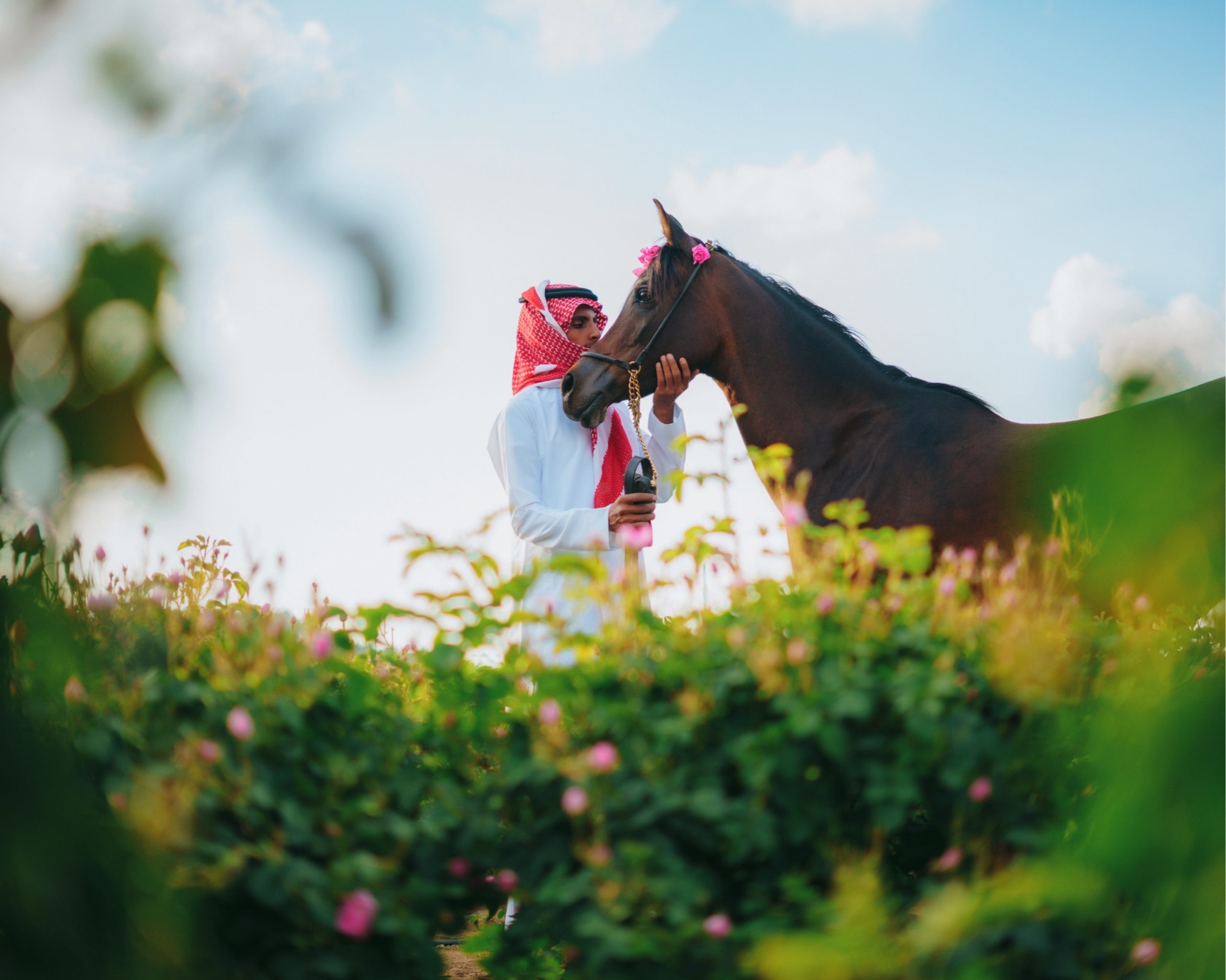
Every spring, the mountain city of Taif transforms into something extraordinary. The Damask rose, known locally as the Taif rose, begins its brief but spectacular bloom across the elevated farms of Al Hada and Al Shafa, drawing visitors from across the Kingdom and beyond. This year, the 2026 harvest season launched in full force at the start of April, and farmers across the region have entered the most intensive weeks of a 45-day cycle that defines both the cultural calendar and the economic heartbeat of one of Saudi Arabia’s most storied cities.
The harvest is a race against time. Every morning, before the sun crests the horizon, workers move through the rose fields by the thousands, picking blooms that begin losing their concentrated oils the moment daylight touches them. The goal is always the same: gather as much as possible in those first cool hours, when the petals carry the highest density of essential oil that will later be transformed into some of the rarest fragrance products in the world.
From Petal to Perfume, The Ancient Art of Distillation
Once collected, the roses begin a transformation that has been refined over centuries. Inside more than 40 traditional and modern distilleries operating across Taif, large copper pots receive between 10,000 and 20,000 roses each. The pots are sealed and heated at a carefully controlled temperature, releasing steam saturated with aromatic compounds. That steam travels through cooling tanks, known locally as almultaqa, and condenses into two highly prized products: rose water and the far rarer rose oil, known as dahn al-ward.
Rose oil from Taif is among the most expensive in the world. Producing a single kilogram requires millions of petals, and the oil commands extraordinary prices from international perfume houses that source it as a foundation for their most exclusive creations. The same oil carries a spiritual significance that runs far deeper than commerce, it has long been used in the ritual perfuming of the holy Kaaba in Makkah, embedding Taif’s roses into the religious fabric of the entire Islamic world.
A Cultural and Economic Pillar Under Vision 2030
The Ministry of Environment, Water and Agriculture oversees the harvest each year, providing technical assistance to farmers and promoting sustainable cultivation practices that keep this heritage industry competitive on the global stage. The rose sector contributes directly to the broader Vision 2030 agenda, particularly in areas of tourism diversification and the growth of domestic artisanal industries that express the Kingdom’s cultural identity.
The Taif rose harvest has grown into far more than an agricultural event. It draws visitors who come to witness the fields in full bloom, step inside working distilleries, and return home with bottles of rose water or small vials of oil that carry an unmistakable scent of the high mountains. This experience has become a cornerstone of domestic tourism, connecting people with a tradition that has shaped the identity of Taif for generations.
As April rolls on and the terraced hillside farms remain draped in pink, Taif is once again proving that some of the Kingdom’s most enduring traditions are also among its most forward-looking assets, fragrant, resilient, and deeply rooted in the land.