

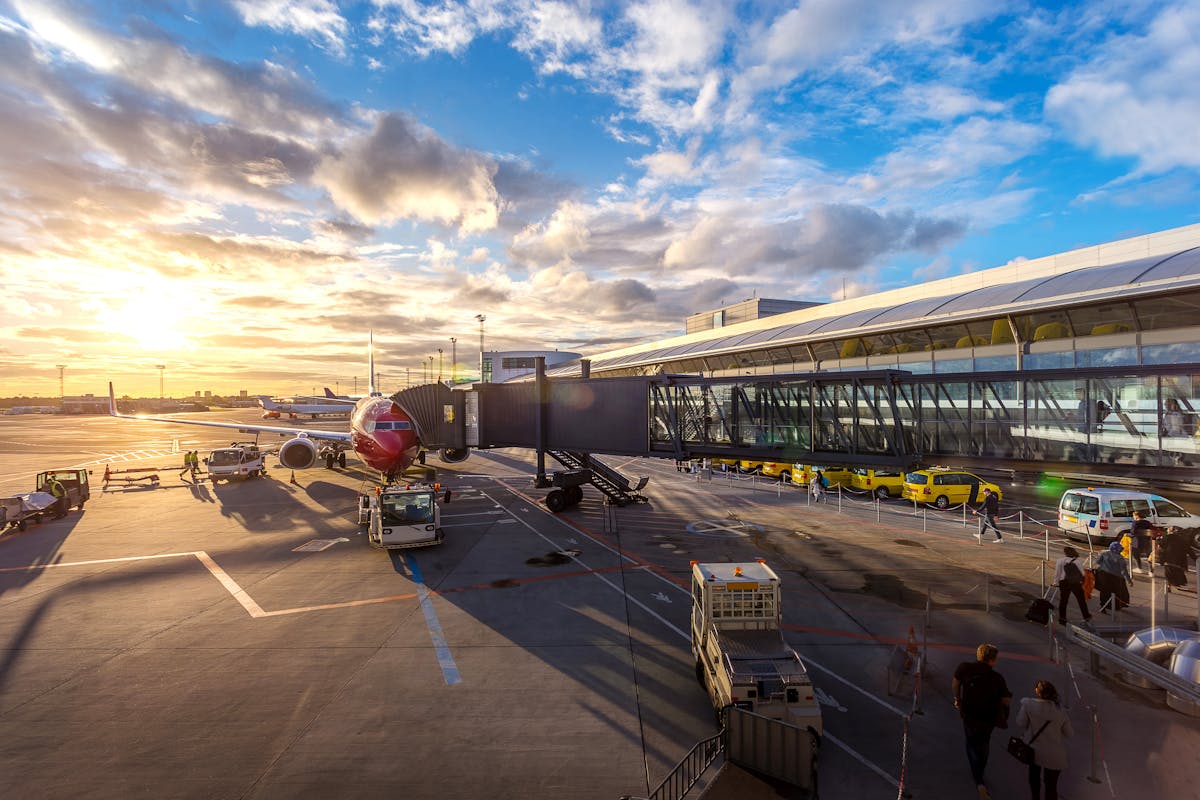
King Khalid International Airport in Riyadh has successfully completed the most ambitious terminal reallocation project since its establishment, marking a turning point in the capital’s aviation infrastructure. The transition, carried out from February 16 to 25, restructured airline operations across all five terminals to improve connectivity, reduce transfer times and enhance the overall passenger experience.
A New Terminal Layout for a Growing Capital
Under the new configuration, Terminals 1 and 2 now serve international flights operated by national carriers, while Terminals 3 and 4 handle their domestic routes. Terminal 5 has been assigned exclusively to international flights operated by foreign airlines. The restructuring was designed to streamline passenger flow between domestic and international services, particularly for transit travelers who previously faced longer waiting times navigating between separated terminals.
The reallocation was implemented through a comprehensive operational plan developed in coordination with the Ministry of Transport and Logistics Services, the General Authority of Civil Aviation, Matarat Holding Company, and all airport stakeholders. More than 650 guides were deployed throughout the transition period to assist passengers, while integrated operational systems ensured real-time coordination between all parties involved.
Operational Scale During the Transition
The scale of the project was considerable. During the transition window, the airport processed more than 1,046,000 arriving and departing passengers across over 7,650 flights. Supporting measures included one hour of complimentary parking, free inter-terminal transport via taxis and the Riyadh Metro, and shuttle buses running at four-minute intervals to ensure seamless movement between terminals.
Riyadh Airports CEO Ayman Abu Abah credited the success of the operation to the stability of flight schedules and high adherence rates throughout the changeover. He noted that the collaborative effort between government bodies, security sectors and airlines — both national and international — was essential to completing the project without disruption to daily operations.
Capacity Set to Reach 56 Million Passengers
The completed restructuring is expected to raise the annual capacity of Terminals 3 and 4 from 16 million to 25 million passengers. Overall, the airport’s total capacity is projected to grow from 42 million passengers in 2025 to 56 million by the end of 2026, a leap of more than 33 percent. Transit passenger capacity will also increase to 7.5 million annually, reinforcing the airport’s position as a regional and international hub.
The expansion aligns with Saudi Arabia’s broader aviation strategy under Vision 2030, which aims to transform the Kingdom into a global logistics and connectivity center. With the new King Salman International Airport also under development in Riyadh, the capital is positioning itself to accommodate the rapid growth in both tourism and business travel that the Kingdom has experienced in recent years.