

The Saudi Heritage Commission has announced evidence of human activity 125,000 years ago at Uruq Al-Julaybah, a site on the shore of the ancient Mundafan lake in the Najran region. The findings were published in the journal Science on 12 November 2026 by a team from the commission, King Abdullah University of Science and Technology, Griffith University in Australia and King Saud University, with other Saudi and international partners.
The site lies in what is now the Empty Quarter, the largest sand desert in the world. At the time, during a warm and wet period often called Green Arabia, Mundafan was a freshwater lake of about 340 square kilometres, up to 29 metres deep and ringed by grassland.
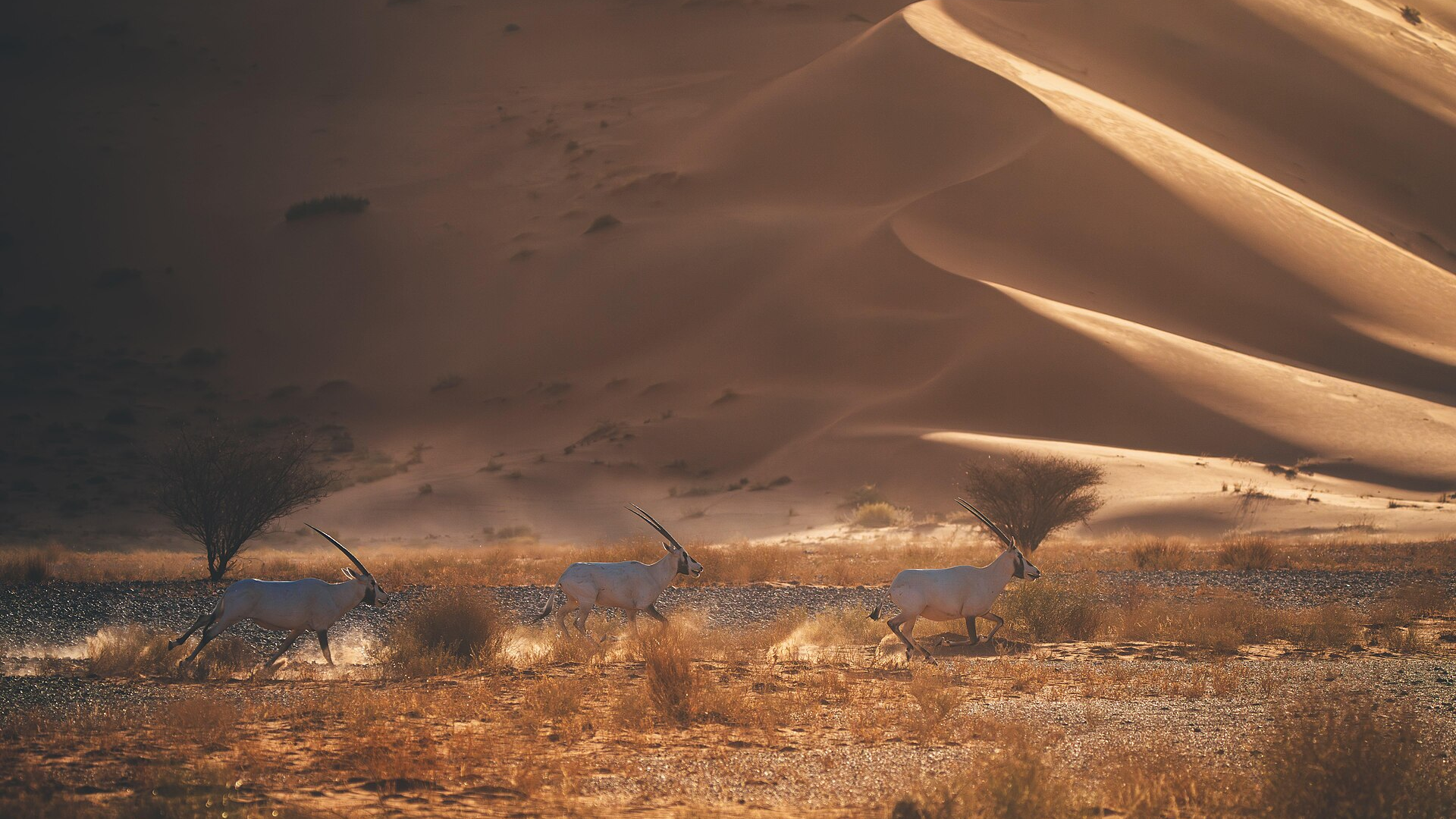
Researchers recorded more than 130 find spots and over 500 fossil specimens. The animals include hippopotamus, an extinct long-horned buffalo, camel, Arabian oryx, gazelle and ostrich. The team also collected 5,511 stone tools, more than 98 percent of them flint, many shaped with the Levallois method, which requires the knapper to plan the final form in advance.
Traces left on the tools point to work with plant fibres, wood, resin, fat and collagen. Some stone points carry impact damage and signs that they were fixed to shafts. The team also detected compounds linked to Acokanthera schimperi, a plant known historically as a source of arrow poison, which gives the paper its title, but the study says the evidence is not enough to show how the plant was used.
“This site gives us a rare and richly detailed view of how people lived in a landscape that looks nothing like Arabia today,” said Professor Chris Clarkson of Griffith University, one of the lead scientists, in a statement from the research team.
The commission supported the fieldwork at the site during the 2023 season. Earlier finds in the Kingdom include stone tools at Shuwayhitiyah in Al-Jouf, dated to about 1.3 million years ago, and ancient human footprints in the Tabuk region that are more than 120,000 years old.