

By Abeer Abdalla, Managing Editor, The Saudi Times
On July 16, four musicians from different worlds meet at The Warehouse in JAX District for a tribute that says as much about Riyadh’s cultural evolution as it does about the songs.
Grunge was born from weather.
It was a cold, damp, rain-soaked sound, shaped in the Pacific Northwest of the United States by young musicians who turned alienation, frustration, and small-town invisibility into something loud enough for the world to hear. On Thursday, July 16, that sound reaches the Najd.
The climate could hardly be more different. Seattle gave Nirvana its gray skies and wet pavement. Riyadh offers dry summer air, sandstone horizons, and the palms of Wadi Hanifah. Nearly 9,000 kilometers and 35 years separate the source from the stage. The distance disappears with the first chord.
The venue is The Warehouse in JAX District, Diriyah’s former industrial quarter, now one of the capital’s most compelling creative districts. Studios, galleries, and musicians have taken over buildings once defined by manufacturing. Minutes away stand the walls of At-Turaif, where the First Saudi State was established in 1727.
That proximity matters. This is not simply an American rock tribute dropped into Riyadh for an evening. It is another example of what the city is becoming: a place where Saudi history remains firmly present while new cultural forms are tested, translated, and given a local life.
The Anatomy of a Cultural Rupture
For readers who did not grow up with the band, Nirvana was a band of three musicians from Washington state, led by singer and guitarist Kurt Cobain. Their second album, Nevermind, was released in September 1991 with modest commercial expectations, entering the American album chart at number 144. Four months later, it reached number one, displacing Michael Jackson from the top of the Billboard 200.
It was a cultural earthquake. A band that had recently been playing small clubs and basements became the defining voice of a generation, driven by one song, “Smells Like Teen Spirit,” and a music video that MTV broadcast until its images became part of the global memory of the 1990s. While rock music had become polished, styled, and hyper-commercialized, Nirvana arrived wearing secondhand clothes, sounding deliberately rough, and singing to people who felt popular culture had failed to notice them.
Beneath the distortion, Cobain was an exceptionally disciplined melodic writer. The formula appeared simple, yet devastatingly effective: restrained verses, explosive choruses, then silence before impact. Quiet, loud, quiet, loud. Countless rock bands have borrowed the structure since. Few have matched the emotional force behind it.
The Custodians
Nevermind turns 35 this year. Cobain, who passed away at 27 in April 1994, did not live to see the legacy of his work. Everything that followed has involved other people carrying the music forward. A strong tribute band is not interested in impersonation; it acts as a custodian. The objective is not to reproduce a museum piece, but to discover whether the songs still possess enough electricity to move a different room, in a different country, decades later.
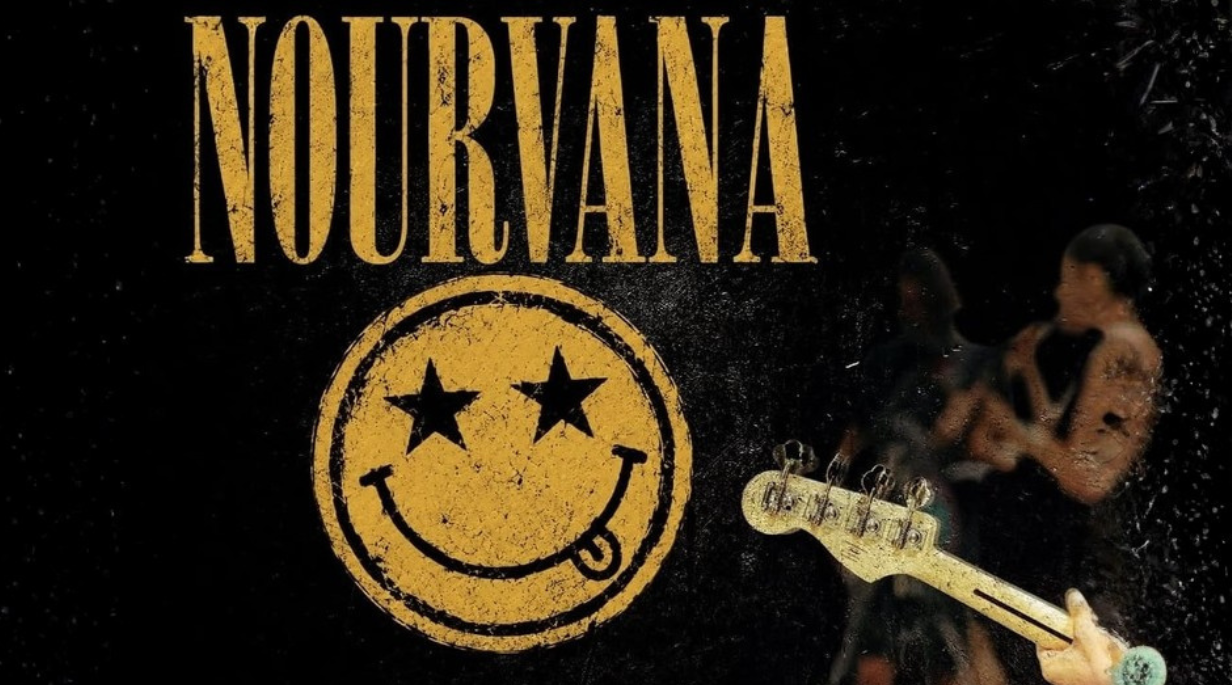
Enter Nourvana. The name is a local joke that marries Nirvana with the Arabic name Nour. It sounds playful until the music begins. Then, the room becomes dead serious. The band is a masterclass in collaboration, reflecting the cosmopolitan reality of modern Riyadh:
- Jorge Machado (Guitar): A Portuguese guitarist recording as LJaxe within the MDLBEAST studio ecosystem, who founded the project in Saudi Arabia, his chosen second home, in December 2024.
- Bassel El-Zeind (Drums): An Egyptian musician and familiar presence across Riyadh’s live circuit, who keeps time for the local thrash band Dune.
- João Faria (Bass): A Portuguese bassist bringing a lifelong relationship with alternative rock to the low-end.
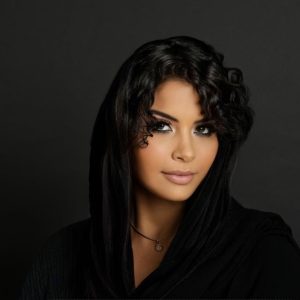
- Nourah Alammary (Vocals): A Saudi singer whose world has largely been built around jazz, soul, and pop, having performed everywhere from local jazz clubs to MDLBEAST Soundstorm.
Four musicians. Several nationalities. Different genres. One record. Nourvana’s rehearsals reflect the city in which the band was assembled. English functions as the common working language. Arabic moves through the room. Portuguese takes over between Machado and Faria when the count becomes urgent. But the final language is rhythm.
“When the music industry was obsessed with glossy, harmonious sounds, Nirvana broke through with a beautifully flawed and abrasive noise that spoke to a generation,” said João Faria.
“Growing up feeling like an outsider, I found my sanctuary in Nirvana and other Seattle bands. Their music was the exact escape my soul was looking for.”
Where the chords find their familiarity, the songs grow into a new and greater life. Alammary is not attempting to become Cobain. She is bringing the material through her own voice and musical instincts, marking the evening’s most dramatic stylistic leap. “Nirvana got to me young,” she recalled.
“I was seven or eight when I saw ‘Smells Like Teen Spirit,’ and I remember being completely floored by how expressive it was. My world has mostly been jazz, pop, and soul, so this felt like a wild left turn… As a songwriter, spending time inside Kurt’s work has been a masterclass in raw instinct and originality.”
A Saudi Accent on Seattle Rain
Vision 2030 is often discussed in terms of infrastructure, investment, and tourism. But its cultural transformation is equally significant. It can be seen in the way Saudi artists now confidently move between inherited identity and global influence.
Saudi culture has never existed in isolation. Trade routes, pilgrimage, and exchange have always brought outside ideas into the Arabian Peninsula. The enduring achievement has been the ability to receive those influences without surrendering local identity. Today, Riyadh is doing something similar at extraordinary speed. It is developing its own cultural grammar, one capable of accommodating jazz, metal, Arabic pop, electronic music, visual art, and, for one night in July, the sound of Seattle rain.
You do not need to know Nirvana’s full catalog to enter the room this Thursday. The hooks are immediate. The riffs are direct. The choruses are built to be shouted collectively.
A tribute performed properly is an argument conducted at volume, asking whether old songs can still feel urgent. Come for the noise. Stay for the moment when it becomes clear that Riyadh has not merely imported this music; it made a space its own special way, placed new voices inside it, and sent it back into the night with a Saudi accent.
The Details:
- When: Thursday, July 16 | Doors open at 9:00 PM
- Where: The Warehouse, JAX District, Diriyah
- Support: Opening set from Mr Monkey
- Tickets: Available now on Webook
Cobain once wrote, “Come as you are,” one of rock music’s most enduring invitations. It offered belonging without demanding transformation first. This Thursday, take him up on the offer.