

As Ramadan 1447H enters its final days and the Kingdom settles into the Eid Al-Fitr holiday period, Saudi Arabia turns its gaze toward the western horizon in anticipation of the Shawwal crescent, the sliver of new moon whose sighting marks the end of the holy month and the beginning of the celebration of Eid Al-Fitr. The search for the crescent, known as رؤية هلال شوال, is among the most watched events in the Islamic calendar across Saudi Arabia and the wider Muslim world.
The Supreme Court and the Moon Sighting Tradition
In Saudi Arabia, the official determination of the start of each Islamic month rests with the Supreme Court, which issues a public call for Muslims to attempt to sight the crescent moon on the evening of the 29th day of the preceding month. Trained moon-sighting committees spread across multiple regions of the Kingdom, and members of the public who believe they have sighted the crescent may present testimony to their local court, which is then relayed to the Supreme Court in Riyadh for a final ruling.
This reliance on actual naked-eye observation, rather than purely astronomical calculation, reflects the classical Islamic jurisprudential position that the Islamic calendar is grounded in direct human witness of the moon. It is a practice that has been followed in the Kingdom for centuries and continues to carry deep spiritual and communal significance for Saudi society. When the Supreme Court announces the sighting, the declaration is broadcast on official state television channels and rapidly shared across social and digital media, becoming one of the most anticipated announcements of the year.
Eid Al-Fitr Expected on March 20
The International Astronomical Centre (IAC) confirmed in advance that the Shawwal crescent moon for 1447H would likely become visible on the evening of March 18, corresponding to the 29th of Ramadan, meaning that if the crescent is sighted on that night, Eid Al-Fitr would fall on Thursday, March 19. Should the moon not be sighted on March 18, Ramadan would be completed as a 30-day month and Eid would fall on Friday, March 20, which is the date the IAC has identified as most probable and which Saudi Arabia had already designated as the start of the official Eid public holiday.
Saudi Arabia has already declared the national Eid holiday to run from March 17 through March 23, giving the Kingdom a seven-day break to mark the celebration. Banks, financial markets, and government departments have suspended operations for the duration, and airports and travel hubs have been operating at heightened capacity as millions of Saudi citizens and residents travel to celebrate with their families.
A Moment of National and Spiritual Unity
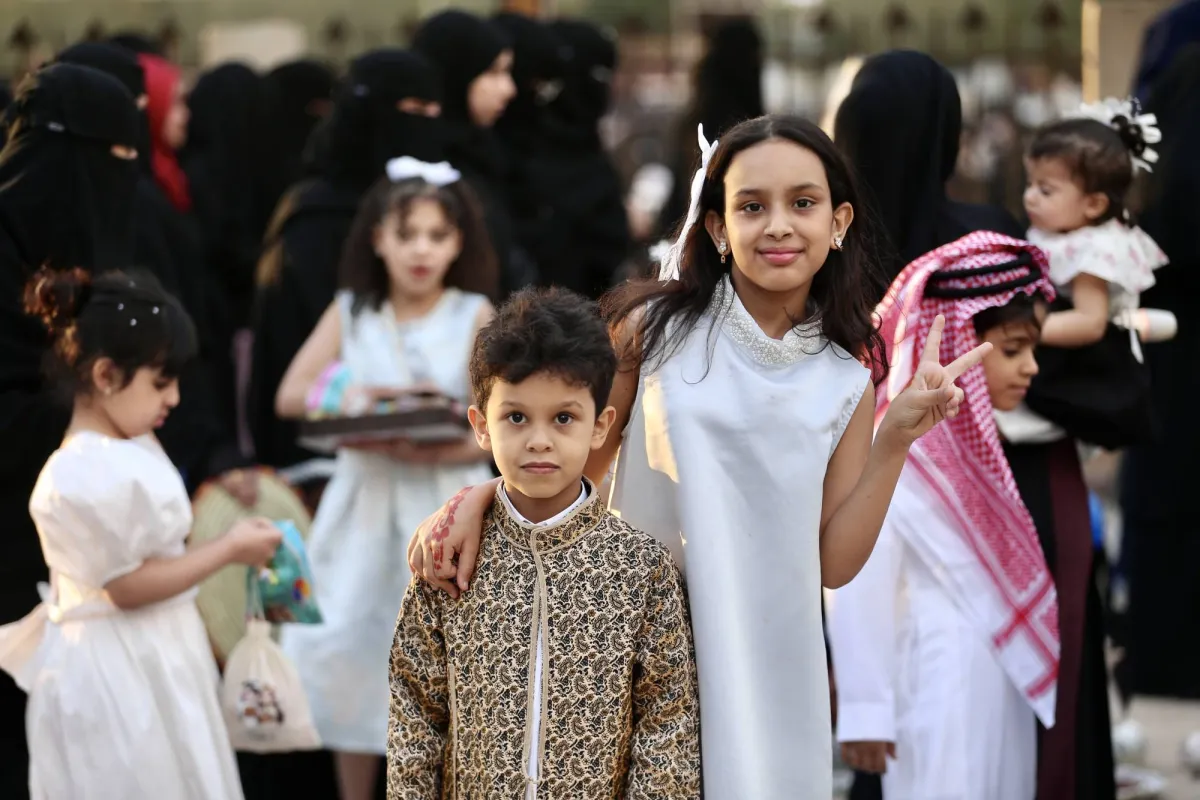
The crescent sighting is more than a calendrical determination, it is a shared moment of anticipation that brings together households, communities, and the nation as a whole. Mosques prepare for the Eid prayer, families begin the final preparations for the celebration feast, children dress in new clothes, and the sounds of takbeer, the declaration of the greatness of God that marks the opening of Eid, begin to fill the air across Saudi Arabia’s cities and towns as the announcement is awaited.