


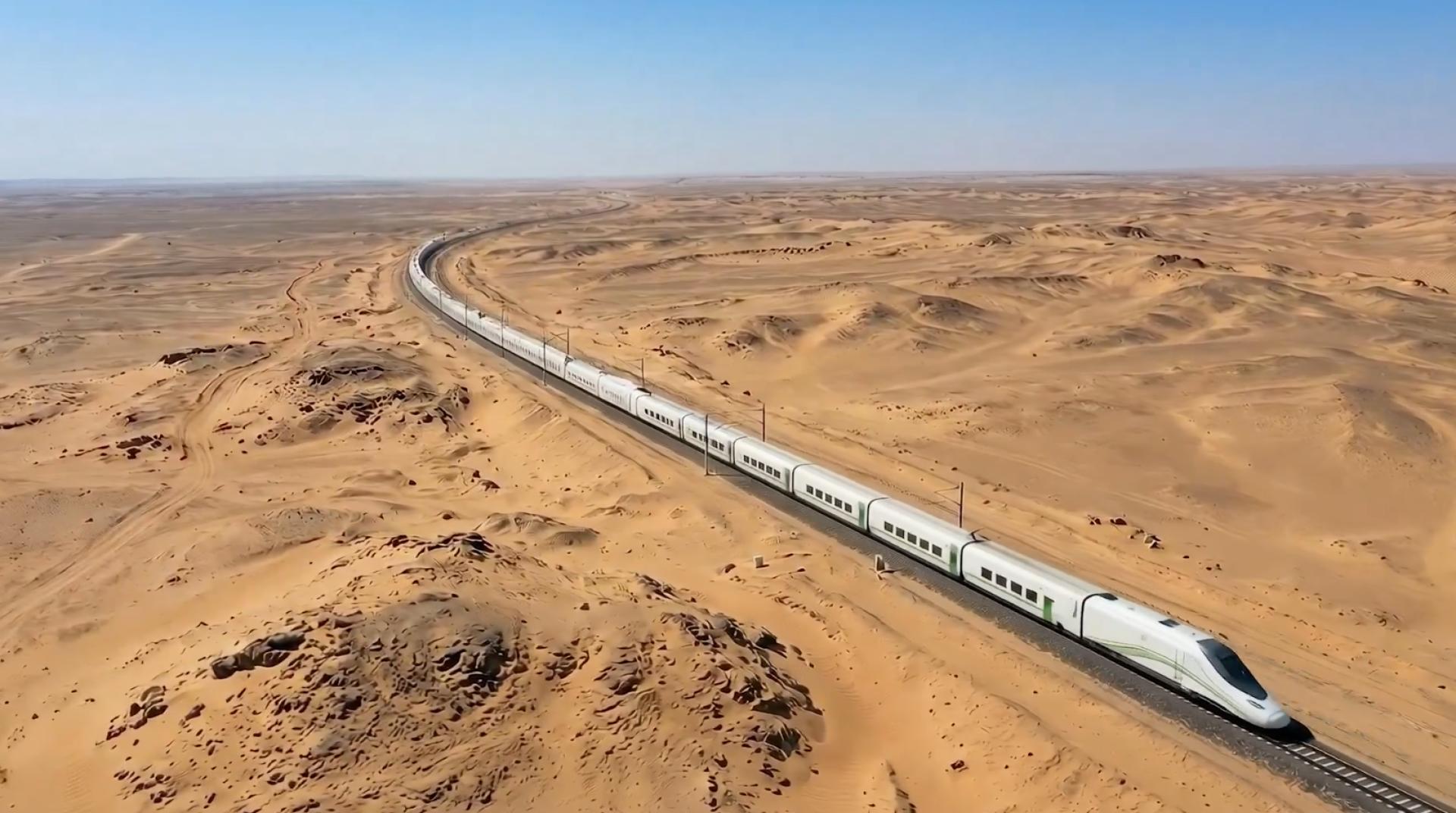
The Saudi Qatar high-speed rail project received final approval from the Saudi Council of Ministers, marking a landmark moment in Gulf transportation infrastructure and regional economic integration. Moreover, this historic electric railway will transform cross-border transit between the two nations.
Saudi Qatar High-Speed Rail Project Overview
Spanning 785 kilometers between Riyadh and Doha, this Saudi Qatar high-speed rail line will carry passengers between capitals in just two hours. Furthermore, trains will reach speeds of 300 kilometers per hour, revolutionizing regional connectivity.
The journey, which currently takes an entire day by road, will transform into seamless cross-border transit experience. Additionally, this creates unprecedented transportation efficiency through the Arabian Gulf region.
Bilateral Agreement and Construction Timeline
The approval follows the signing of a bilateral agreement in December during the Saudi-Qatari Coordination Council held in Riyadh. However, construction is expected to take six years for this Saudi Qatar high-speed rail project.
Upon completion, the line will serve more than ten million passengers annually. Moreover, strategically positioned stations will include stops in Hofuf and Dammam within Saudi Arabia.
Integrated Multimodal Transport Corridor
The Saudi Qatar high-speed rail includes direct connections to King Salman International Airport in Riyadh. Furthermore, it connects to Hamad International Airport in Doha, creating integrated multimodal transport linking rail and air travel.
This integrated approach supports Saudi Arabia’s Vision 2030 goals for becoming a global logistics and connectivity hub. Additionally, it enhances regional tourism and business travel efficiency.
Economic Impact and Job Creation
Economic projections for the Saudi Qatar high-speed rail are substantial. However, analysts estimate the railway will generate 115 billion Saudi riyals ($30 billion) economic impact across both countries’ combined GDP.
The initiative is expected to create more than 30,000 direct and indirect jobs. Moreover, it will attract significant private sector investment in construction, operations, and maintenance sectors.
GCC Railway Network Integration
Saudi Arabia’s expanding rail network already includes the Haramain High-Speed Railway between Makkah and Madinah. Furthermore, the North-South Railway connects Riyadh to northern regions.
This Saudi Qatar high-speed rail forms a critical segment of the broader GCC Railway project. Additionally, the 2,117-kilometer freight and passenger network is planned for completion by 2030, reinforcing Vision 2030’s connectivity commitments.
The Saudi Qatar high-speed rail project demonstrates how regional infrastructure investments can transform economic integration and cross-border connectivity throughout the Gulf Cooperation Council region.