

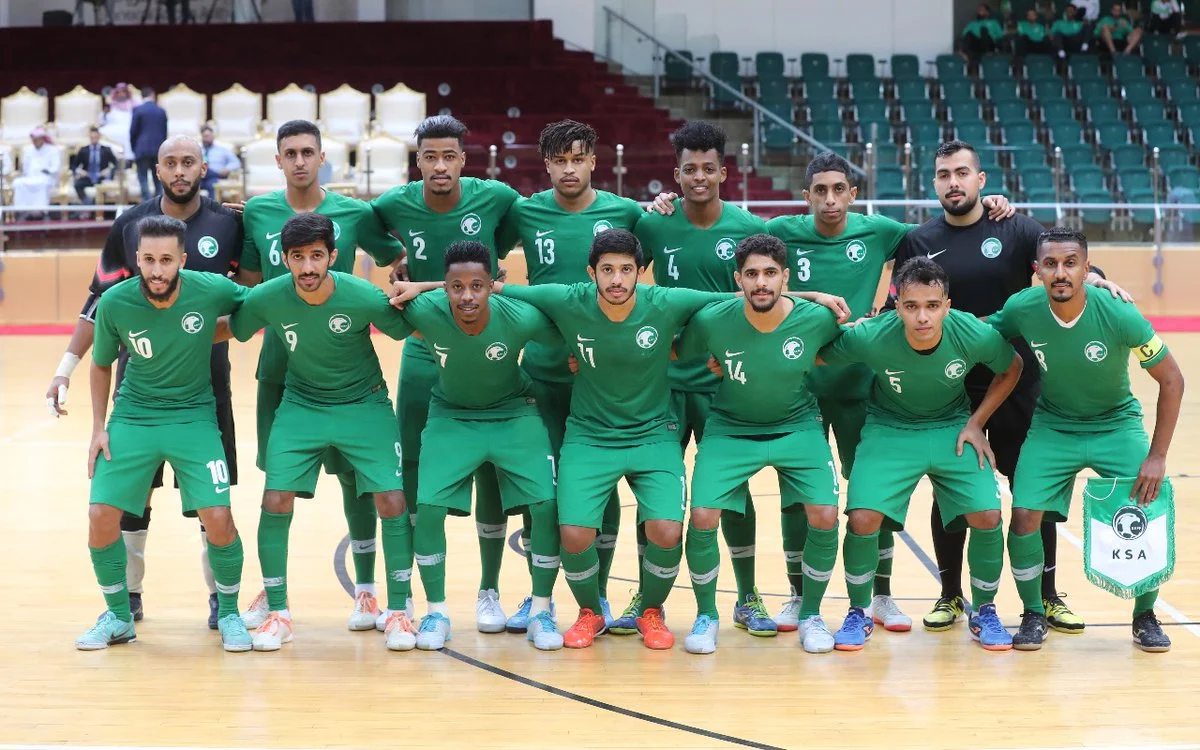
Saudi Arabia’s second national team gathered competitive experience on Saturday evening, facing Sudan in a friendly match at King Abdullah Sports City in Jeddah. The encounter ended 2-1 in Sudan’s favour, but the result was almost incidental to the exercise. Italian head coach Luigi Di Biagio used the occasion to cast a wide net across the country’s talent pool, rotating freely through two different lineups in the span of ninety minutes as the kingdom sharpens its readiness for the 2026 FIFA World Cup.
A Match Designed for Assessment, Not Points
Di Biagio started with goalkeeper Abdulrahman Al-Sanabi and a lineup that included Nawaf Boushal, Khalifa Al-Dosari, Ahmed Sharahili, Mohammed Mahzari, and a midfield anchored to test collective shape under pressure from an organised Sudanese side. Sudan, who arrived in Jeddah with a number of players drawn directly from Saudi Pro League clubs, opened the scoring late in the first half and extended their lead before the hour mark, adding a second goal in the 65th minute to establish a comfortable cushion.
The Saudi reply came in the 71st minute through Eid Al-Muwallad, a forward whose significant senior international experience brought both technical quality and an urgency that shifted the rhythm of the closing stages. The goal narrowed the deficit but could not change the outcome — nor was it expected to. Judged against what it was meant to achieve, the match delivered exactly what Di Biagio’s coaching staff required: live minutes for a large group, honest competitive data, and a clear picture of who is performing at the level required for consideration.
Rotations Reveal the Depth of the Pool
The second-half introduction of Islam Hawsawi, Mohammed Sulaiman, Abdulbasit Hindi, Alaa Hajji, Abdulaziz Al-Suwilem, Ali Al-Asmari, Sabri Dahl and Hammam Al-Hammami gave the technical staff a broad sample to analyse from a single match. Several of those players have spent the season in productive form across the Pro League, and the B-team environment offers a structured path for them to demonstrate whether their club performances translate to the more demanding demands of international football.
Sudan’s squad included players who train and compete in Saudi Arabia on a weekly basis — Abdulbaset Hindi from Al-Ettifaq, Abdullah Radif from Al-Fayha, Mohammed Al-Dosari from Al-Raed, Fares Abdi from NEOM and Mohammed Abdulrahman from Al-Ahli. Their familiarity with Saudi conditions removed any acclimatisation advantage and made the friendly a genuine test rather than an exhibition. The final score, in that context, reads less as a setback and more as a useful data point.
Building Toward the World Cup
While the B side worked through its evaluation in Jeddah, Hervé Renard announced his 27-man senior squad for a separate preparatory fixture against Serbia in the coming days. Goalkeeper Mohamed Al-Owais is among those recalled, and the broader selection reflects Renard’s continued effort to stabilise the first team’s combinations ahead of the tournament. The two programmes — one focused on development, the other on performance refinement — operate in parallel and feed into the same long-term objective.
Saudi Arabia qualified for the 2026 World Cup last October after going unbeaten through the final rounds of the Asian qualifying campaign. With the tournament approaching, every training camp and preparatory fixture carries additional weight. For the players who appeared at King Abdullah Sports City on Saturday evening, the match was an opportunity. For the coaching staff observing them, it was exactly the kind of honest, pressure-tested information that cannot be replicated in training alone.