

A Historic Milestone for Saudi Arabia’s Energy Strategy
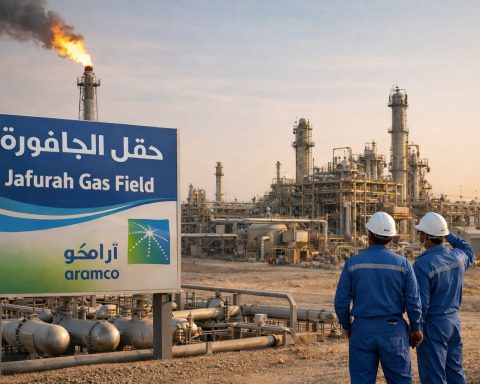
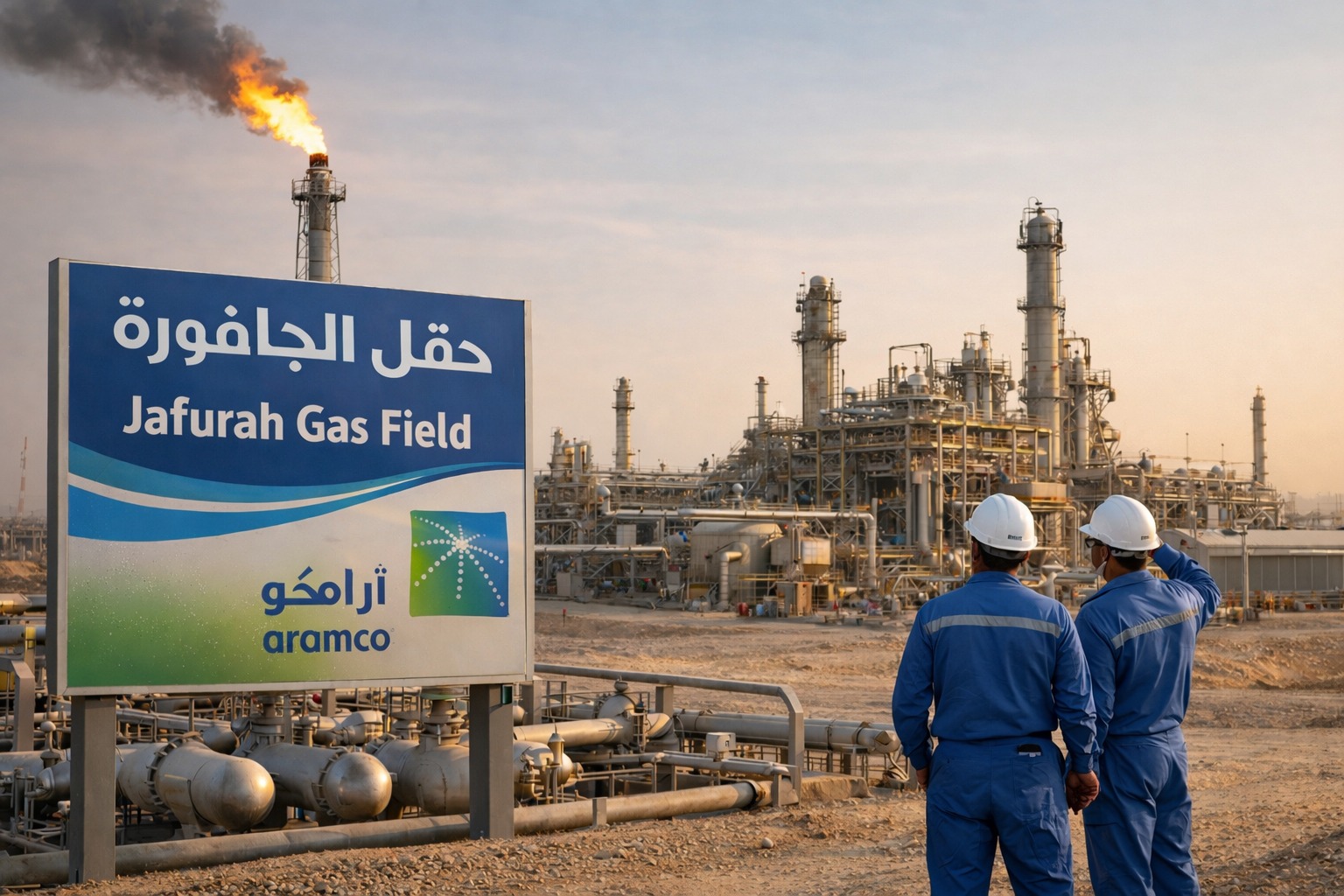
Saudi Aramco has officially announced the start of production at the Jafurah unconventional gas field, marking a historic milestone in the Kingdom’s efforts to become a major global natural gas player. The field, located southeast of the giant Ghawar oilfield in the Eastern Province, is estimated to contain 229 trillion standard cubic feet of raw gas and 75 billion barrels of condensate, making it potentially the largest shale gas development outside the United States.
Production at Jafurah began in December 2025, and Aramco made the formal announcement this week alongside the commissioning of the Tanajib Gas Plant, one of the largest gas processing facilities in the world. Together, these developments represent a critical step in Aramco’s strategy to expand its sales gas production capacity by approximately 80 percent by 2030 compared to 2021 levels.
A $100 Billion Bet on Gas
The Jafurah project sits at the center of a $100 billion investment program that Aramco has described as a strategic platform supporting the Kingdom’s broader growth ambitions across energy, artificial intelligence, and petrochemicals. Since 2018, Aramco has awarded approximately $26 billion in contracts for Jafurah’s first two phases, bringing in international partners including Halliburton, Sinopec, Samsung Engineering, and Saipem to deploy advanced drilling technologies.
Among the innovations at Jafurah are so-called walking rigs, towering drilling structures capable of repositioning without full dismantling and reassembly. These rigs, combined with the hydraulic fracturing and horizontal drilling expertise perfected in the American shale basins, have allowed Aramco to accelerate well completions across the vast desert basin.
Aramco’s Upstream President Nasir Al-Naimi said that early well performance has been outstanding, validating the company’s high-tech approach and reaffirming the significance of the project to its gas growth strategy.
Freeing Up Crude Oil for Export
The strategic logic behind Jafurah is straightforward. Saudi Arabia currently uses more than one million barrels per day of crude oil and fuel oil for domestic power generation. By replacing 500,000 barrels per day of that consumption with natural gas by 2030, the Kingdom would free up crude oil for export. At current oil prices of around $70 per barrel, that shift could generate nearly $12.8 billion in additional annual revenue.
Aramco has projected that its gas expansion will deliver incremental operating cash flows of $12 billion to $15 billion by 2030, with attractive double-digit returns as the company unlocks significant volumes of high-value liquids and capitalizes on strong domestic gas demand.
A Vision 2030 Priority
The development of Jafurah aligns directly with the objectives of Vision 2030, which calls for the diversification of Saudi Arabia’s economy away from dependence on oil exports. Natural gas is expected to play a central role in powering the Kingdom’s expanding industrial base, its growing data center infrastructure for artificial intelligence applications, and its ambitious new city and tourism projects.
With fewer than five years remaining to achieve the Vision 2030 milestones, the successful launch of Jafurah production signals that the Kingdom’s energy transformation is advancing at pace. The project has already emerged as Saudi Arabia’s priority capital investment and a new frontier for international oilfield services companies seeking growth opportunities beyond the maturing American shale basins.