

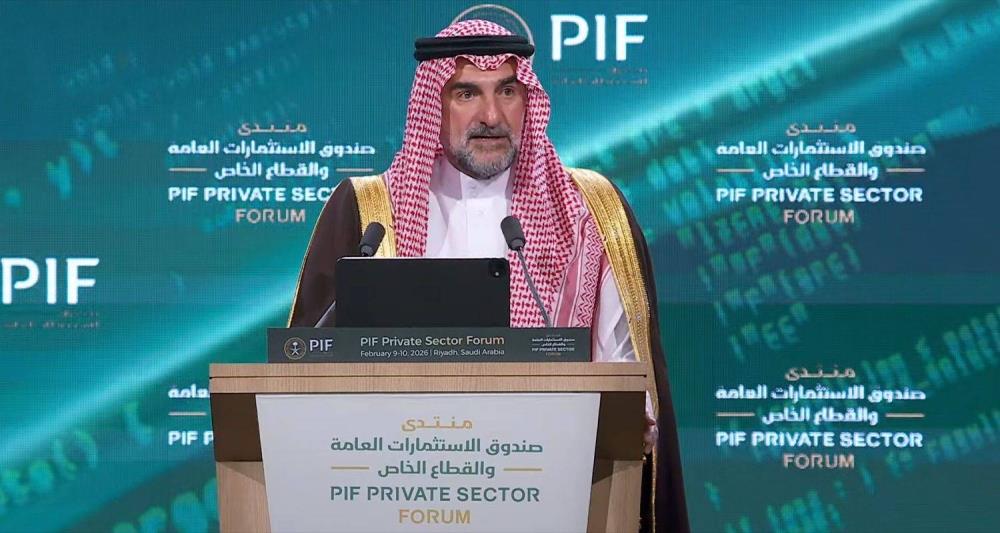
Saudi Arabia’s Public Investment Fund — the US$1 trillion sovereign wealth fund at the centre of Vision 2030 — is in the midst of a significant strategic recalibration. Rather than stepping back from its ambitions, PIF is redirecting capital toward a defined set of priority sectors, concentrating investment in artificial intelligence, events and entertainment, and housing, while scaling back the broader simultaneous expansion that characterised the earlier phase of the Vision 2030 programme.
The Numbers Behind the Shift
The scale of the adjustment is visible in the construction contract figures. The total value of contracts awarded in Saudi Arabia fell from approximately US$71 billion in 2024 to below US$30 billion in 2025 — a decline of nearly 60 percent. PIF’s own share of those awards dropped even more sharply, from around 38 percent to just 14 percent. For a fund that had been synonymous with ambitious simultaneous megaproject launches, this shift represents a meaningful change in operating philosophy.
The proximate driver is oil revenues. Saudi Arabia’s fiscal breakeven price exceeds US$90 per barrel according to International Monetary Fund estimates, while Brent crude has traded largely in the US$60–65 range over the past year. That sustained gap has filtered through the Kingdom’s fiscal system. Saudi Aramco reduced its 2025 dividend payout by roughly a third — to approximately US$84.5 billion — compared to prior years. Since PIF holds a 16 percent stake in Aramco, this translated into at least US$6 billion less in fund income. Combined with PIF’s cash reserves falling to around US$15 billion in late 2024 — their lowest level since 2020 — the fund approved a minimum 20 percent reduction in spending across its portfolio of over 100 companies at a December 2024 board meeting, with some project budgets cut by as much as 60 percent.
Where Investment Is Now Accelerating
The recalibration does not mean retreat. It means selectivity. PIF has identified artificial intelligence, events and entertainment, and residential housing as the sectors receiving the highest concentration of capital in 2026. The AI sector push aligns with Saudi Arabia’s ambition to become a global hub for technology investment and deployment — a goal reinforced by the country’s hosting of major AI conferences and the significant investments made by PIF-affiliated entities in AI infrastructure and data centres. The events and entertainment priority is equally clear in execution: Saudi Arabia’s entertainment calendar has expanded rapidly, from Riyadh Season to sporting mega-events, and PIF has been a driving force behind the infrastructure that supports these programmes.
Housing represents the third pillar of the concentrated spend. The Kingdom has a young and fast-growing population, and residential supply has consistently lagged demand in major cities. PIF’s housing subsidiary, which holds one of the largest residential development mandates in the Kingdom, is accelerating delivery on existing commitments while new speculative projects in other sectors are paused or resized.
What the Recalibration Means for Investors
For businesses and investors engaged in or considering the Saudi market, the message from PIF’s 2026 strategy is precise: opportunity is concentrated, not universal. Sectors aligned with the fund’s current priorities — AI infrastructure, entertainment, housing and supporting services — are where capital is flowing. Sectors that relied on the earlier phase of broad simultaneous megaproject spending will need to find different partners or wait for the investment cycle to turn. Saudi Arabia’s transformation story remains on course, but its velocity and focus have been refined by the realities of the global oil market and the discipline that comes with managing a trillion-dollar fund at scale.