

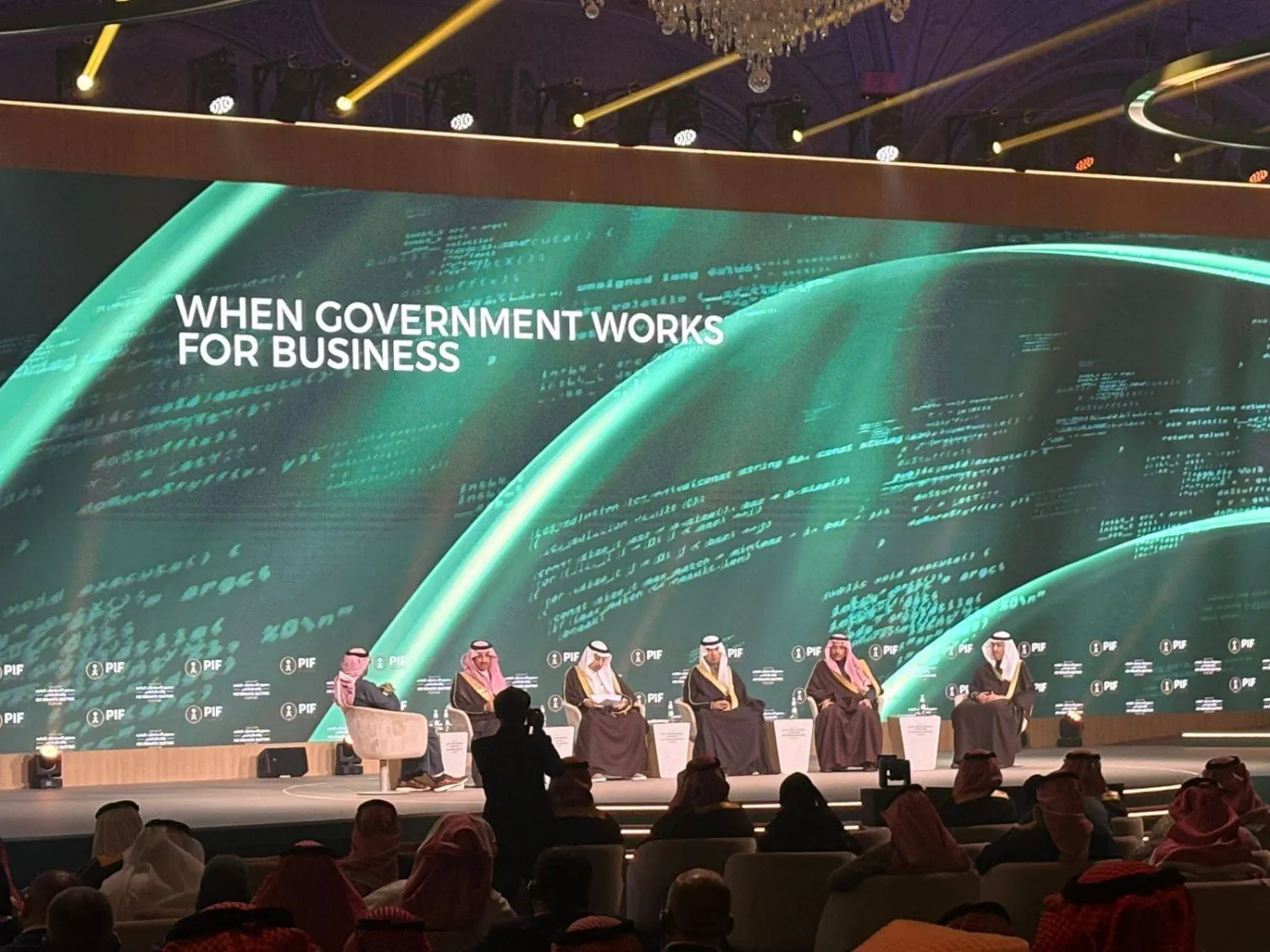
Saudi Arabia’s Public Investment Fund is preparing to unveil a new five-year strategy that represents a significant shift in how the world’s most active sovereign wealth fund approaches its investments. PIF Governor Yasir Al-Rumayyan confirmed at the FII Priority Miami conference on Thursday that the plan would be released within the coming weeks, and that its defining feature would be a decisive turn toward attracting private-sector capital into the fund’s expanding portfolio of projects.
The announcement marks a philosophical evolution for an institution that has, since its transformation in 2017, operated largely as a leading equity investor — committing its own capital at scale into major domestic projects without seeking co-investors to share the financial commitment. That model served the early stages of Saudi Arabia’s economic transformation well, but the PIF now signals it is ready to move into a new phase.
A New Approach to Capital and Collaboration
Al-Rumayyan was direct in explaining the reasoning: “We wanted to do most of these investments by ourselves and it’s all equity. Now, we’re looking into it in a greater way — how to invite people to come and work with us.” Referencing Red Sea Global specifically, he noted that the foundational work already completed can now serve as the basis for external partners to participate in what comes next.
The new strategy, covering the period from 2026 to the end of the decade, is expected to encourage third-party capital to flow into PIF portfolio companies across a range of sectors. Al-Rumayyan named data centers, pharmaceuticals, and renewable energy as priority areas where the fund is actively seeking international partners to contribute expertise, technology, and investment alongside the PIF’s own resources.
The shift reflects a broader recognition within Saudi economic planning that the next phase of Vision 2030’s delivery — and the acceleration of sectors critical to non-oil growth — requires the depth and specialisation that global private-sector partners can bring. For investors worldwide, it represents a formal opening of one of the most substantial project pipelines on earth.
Artificial Intelligence at the Core of the Agenda
The Miami conference also saw a concrete demonstration of the PIF’s technology ambitions, as Humain — the fund’s artificial intelligence subsidiary — announced a strategic partnership with Silicon Valley company Turing to develop what they described as an enterprise-scale AI agent marketplace. The product, called the Humain One AI Agent Marketplace, will allow businesses to discover, deploy, and scale AI agents within their operations.
Humain had introduced its broader Humain One operating system platform at the FII9 Riyadh conference in October 2025, with CEO Tareq Amin outlining plans for a dual listing in Saudi Arabia and the United States. The new partnership with Turing brings that vision a step closer to commercial reality, and reflects the PIF’s continued commitment to building sovereign technology capability rather than simply consuming it.
Al-Rumayyan also highlighted Saudi Arabia’s growing record of attracting major technology firms — including Google, Oracle, and Microsoft — to establish operations in the Kingdom, framing this as both evidence of the business environment’s maturity and a foundation for the data and AI infrastructure investments planned ahead.
The full strategy document is expected in the weeks ahead, an announcement that investors and industry observers across the world are positioned to study closely.