

Saudi Arabia’s East-West Crude Oil Pipeline — known as the Petroline — is now operating at its full design capacity of 7 million barrels per day, confirming a milestone first telegraphed by Aramco chief executive Amin Nasser to investors earlier this month. The confirmation, reported by Bloomberg and Reuters on Saturday citing a person familiar with the matter, marks the first time the pipeline has maintained throughput at that level since its expanded capacity was unlocked through infrastructure modifications carried out in 2019.
A 1,200-Kilometre Backbone Across the Arabian Peninsula
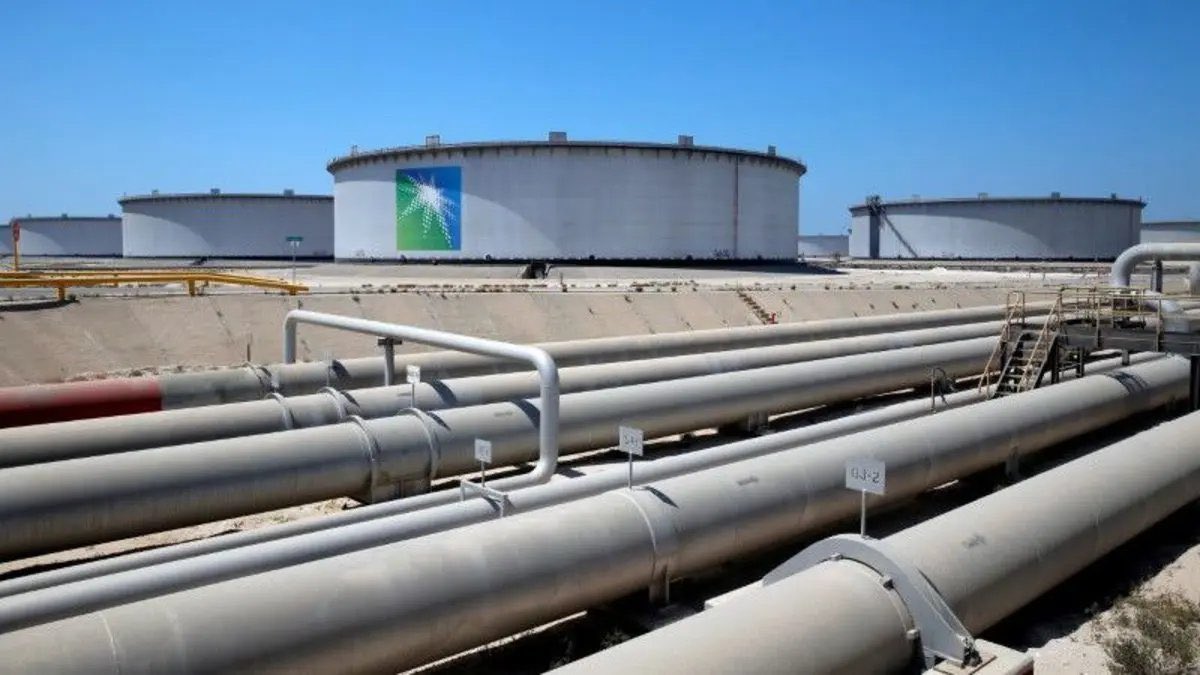
The Petroline connects Saudi Arabia’s Eastern Province — home to Abqaiq, the world’s largest oil processing complex — to the Red Sea export terminal at Yanbu, running 1,200 kilometres across the width of the Arabian Peninsula through a dual-pipe system comprising 48-inch and 56-inch lines. The route provides Saudi Arabia’s oil export network with an overland corridor to the Red Sea that operates entirely independently of the Strait of Hormuz, through which the bulk of Gulf crude has historically moved to Asian and European markets.
Built in 1981 with an original capacity of 5 million barrels per day, the Petroline served as a strategic insurance policy for Saudi energy exports for more than three decades without ever being called upon to operate near its limits. That calculus changed in 2019, when drone and missile strikes on the Abqaiq processing facility prompted Aramco engineers to convert a parallel set of natural gas liquids lines to carry crude oil — a modification that raised the pipeline’s emergency throughput ceiling to 7 million barrels per day. That ceiling had remained theoretical until this month.
From Emergency Ceiling to Sustained Operation
On March 10, Aramco CEO Amin Nasser disclosed on the company’s fourth-quarter earnings call that the Petroline would reach its full 7 million barrel capacity “in the next couple of days.” S&P Global Commodity Insights subsequently confirmed the conversion as complete on March 11. The Bloomberg and Reuters reports on Saturday close the loop, confirming that the pipeline is not merely capable of 7 million barrels per day but is actively maintaining that throughput on a sustained basis — a distinction that matters significantly for planning purposes across oil markets, shipping operators and downstream refiners.
At full capacity, the Petroline now carries sufficient daily volume to supply approximately 7 percent of global crude consumption through a single overland corridor without a tanker transiting the Strait of Hormuz. For Aramco’s operational planning and for Saudi Arabia’s overall export architecture, the confirmation that this volume can be sustained converts a contingency asset into an active pillar of the kingdom’s supply strategy.
Yanbu’s Growing Role in Saudi Energy Infrastructure
The Petroline operating at maximum throughput elevates the strategic weight of Yanbu’s Red Sea export terminals, which are now functioning as a primary crude outlet rather than a supplementary one. The Red Sea route connects northward through the Suez Canal toward European and Mediterranean markets and southward toward buyers in East Africa and Asia — giving Aramco meaningful commercial flexibility to shift delivery geography in response to market conditions, freight economics or customer requirements.
The operational confirmation is the tangible result of four decades of infrastructure investment decisions, beginning with the Petroline’s original construction and extending through its 2019 capacity expansion. For global energy markets, it represents a verified recalibration of Saudi Arabia’s export geography and a demonstration that the kingdom’s energy infrastructure can deliver at the scale its design always promised.