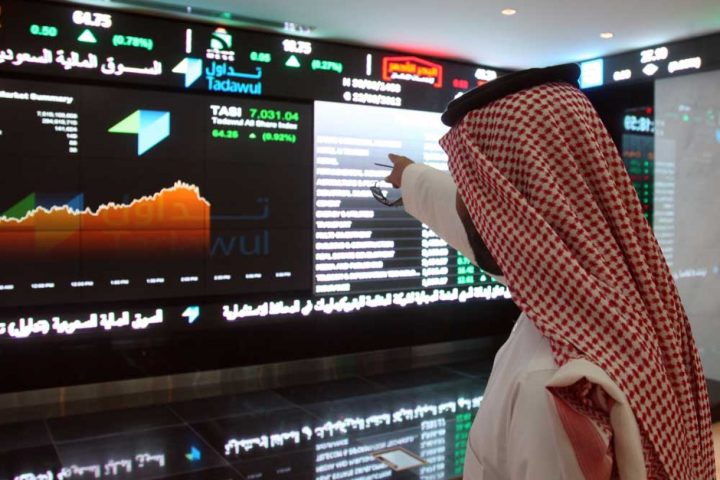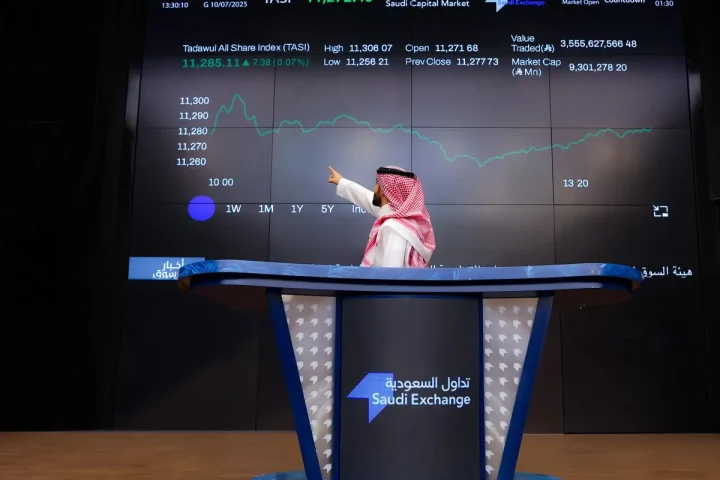


Saudi Arabia’s fiscal year 2025 corporate earnings season comes to a close today, March 31, with a broad cross-section of listed companies having reported their full-year and fourth-quarter results across every major sector. The season offered a nuanced picture shaped by global energy market dynamics, domestic demand growth, and the ongoing structural transformation of the Saudi economy under Vision 2030.
Blue-Chip Companies Lead with Steady Performance
Among the most closely watched names, Saudi Aramco distributed its Q4 2025 dividend today, completing a fourth consecutive year of uninterrupted quarterly distributions. The energy giant declared a per-share payout representing a 3.5 percent increase over the prior year, reaffirming its status as the anchor of the Tadawul exchange and a cornerstone of Saudi Arabia’s investment narrative for both local and international shareholders.
Al Rajhi Bank scheduled its general assembly for April 20 to vote on a SAR 1.75 per share dividend following a steady annual earnings performance, while Al Mawarid Manpower reported full-year 2025 profit that surpassed analyst estimates. Jarir Bookstore declared a SAR 0.26 per share cash dividend for Q4 2025, maintaining the consistent payout profile that has long made it a favoured name among income-focused investors on the exchange.
In the pharmaceutical and life sciences space, SPIMACO posted a 2025 net profit of SAR 184 million, comfortably above consensus forecasts, with shares rallying close to six percent in the final session of the quarter. The result underscored the growing contribution of the healthcare sector to Saudi Arabia’s diversified corporate landscape — a development consistent with Vision 2030 priorities around building a robust domestic health industry.
Mixed Signals in Industrials and Cement
Not every sector closed the season on an upbeat note. Southern Cement reported a net loss of SAR 49 million for the full year 2025, a reversal from its prior position, while Tabuk Cement saw its profit fall 53 percent to SAR 37.3 million. The challenges facing parts of the building materials industry reflect a combination of higher input costs and shifts in construction project timelines that affected cement producers across the Kingdom during the year.
On the corporate restructuring front, Petro Rabigh’s extraordinary general meeting on March 30 approved a capital reduction to SAR 16.7 billion — one of the most significant balance sheet moves of the earnings season and a decision that drew wide attention from market participants and institutional investors alike.
A Strong Foundation for 2026
As the earnings season concludes, the overall picture that emerges is one of institutional resilience. Saudi Arabia’s financial system continues to benefit from high liquidity, strong bank capital ratios, and an increasingly diverse corporate base. The TASI’s year-to-date gain of 6.45 percent heading into Q2 2026 reflects a market that has absorbed global uncertainty without losing its fundamental momentum.
With the Kingdom’s non-oil economy continuing its steady expansion and Vision 2030 milestones being met across multiple sectors, Saudi Arabia’s corporate landscape enters the new quarter with a solid base and growing capacity to attract capital from across the globe.