

Saudi Arabia recorded a volunteer participation rate of 19.0 percent among residents aged 15 and above over the twelve months of 2025, according to the General Authority for Statistics (GASTAT). The findings, published on March 11, form part of the authority’s annual Volunteer Work Statistics Survey, which draws on a nationally representative sample of approximately 24,000 households.
Key Findings From the National Volunteer Survey
The survey records volunteer participation across two reference periods. Over the twelve-month window, the overall rate reached 19.0 percent, while over a shorter four-week reference period the rate stood at 9.5 percent. In both periods, male participants were more likely to volunteer than female participants: the twelve-month rate among men reached 21.5 percent, compared to 14.2 percent among women. Over the four-week period, the corresponding figures were 11.1 percent for men and 6.3 percent for women.
The data also shows near parity between Saudi nationals and expatriate residents in volunteer engagement. Saudi nationals recorded a twelve-month volunteer rate of 18.9 percent, while non-Saudi residents registered 19.1 percent — a difference of just 0.2 percentage points, underscoring the breadth of participation across the Kingdom’s diverse population.
Age, Education, and Volunteering Patterns
Among Saudi nationals, the 35–44 age bracket recorded the highest four-week volunteer rate at 13.6 percent, with men in that cohort reaching 18.5 percent and women 8.8 percent. Educational attainment also proved a strong predictor of participation: Saudis holding a master’s degree or doctorate registered the highest twelve-month volunteer rate at 19.5 percent, with male postgraduate holders reaching 24.9 percent.
The survey distinguishes between different modes of volunteering. Among Saudi nationals, direct volunteering — independent of formal organisations — was the most common form, accounting for 7.5 percent of the four-week rate, compared to 1.6 percent who volunteered through organised entities and 0.2 percent engaged in multiple forms simultaneously.
Civic Engagement as a Vision 2030 Indicator
The annual volunteer survey is one of several household-based surveys conducted by GASTAT to track social development indicators in line with the Kingdom’s Vision 2030 targets. The social pillar of Vision 2030 places civic engagement, community wellbeing, and voluntary sector growth among its key priorities, and the volunteer rate is monitored as a formal metric of societal cohesion and participation.
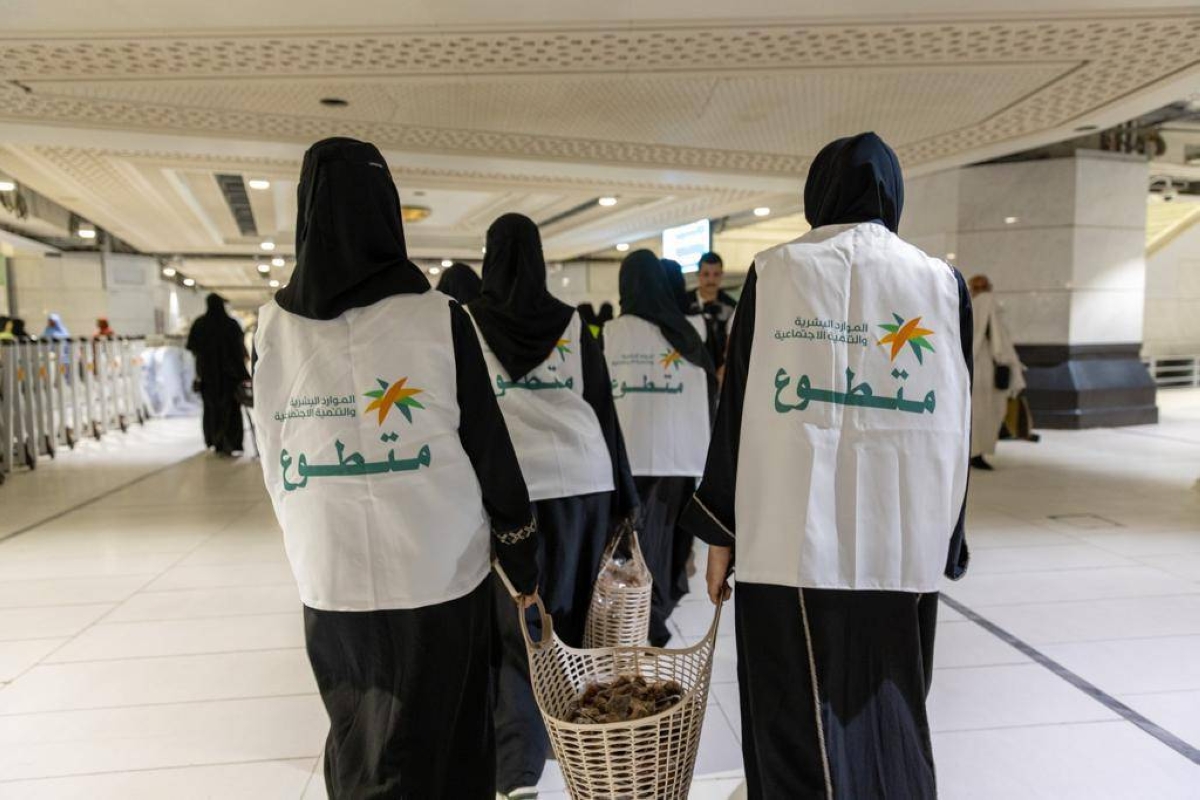
Saudi Arabia has made significant strides in formalising its volunteer infrastructure in recent years, with national platforms and government-backed initiatives expanding access to structured volunteering opportunities across all regions. The GASTAT data provides a baseline for measuring the reach and impact of those efforts, and the 2025 figures suggest sustained engagement across both the Saudi and expatriate communities — with educational attainment and age as the strongest individual predictors of participation.