

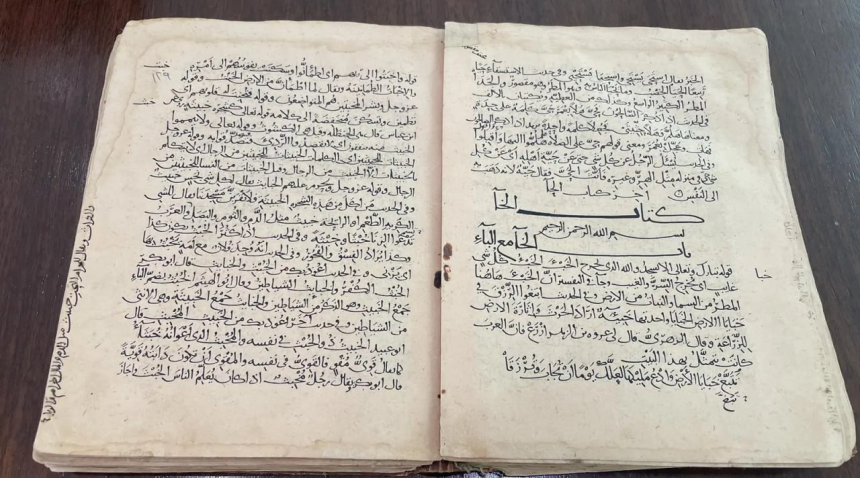
Saudi Arabia’s King Abdulaziz Public Library has unveiled a rare manuscript dating back approximately one thousand years, offering scholars and the public a window into the early foundations of Quranic linguistic study. The manuscript, titled “Gharib Al Quran”, was authored by Abu Ubaidah Mamar Ibn Al Muthanna — one of the pioneering scholars of the early Islamic intellectual tradition — and represents an unpublished work in the field of Quranic sciences that has remained largely inaccessible to researchers until now.
A Manuscript of Rare Distinction
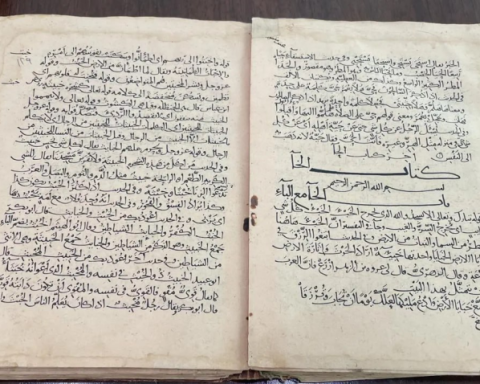
The manuscript dates to the fourth century of the Islamic calendar, placing its origins in the tenth century of the common era. It comprises 23 folios measuring 17 by 22 centimetres, written in a clear Andalusian script — the elegant calligraphic style that flourished across the Islamic west during the height of the Andalusian civilisation. The names of the Quranic surahs within the manuscript are inscribed in the older Kufic script, reflecting the layered calligraphic traditions that characterised manuscript production across different regions and periods of Islamic scholarship.
The work itself addresses the meanings and interpretations of rare or unusual expressions found in the Quran — a field of classical Islamic scholarship known as “Gharib Al Quran” — and constitutes a contribution to the early science of Quranic linguistics that has not yet been published or made widely available to the scholarly community. The library’s decision to reveal it marks a significant moment for researchers in Islamic studies, Arabic linguistics, and the history of the Quranic sciences.
A Library That Guards Centuries of Knowledge
The King Abdulaziz Public Library in Riyadh holds a collection of more than 185 rare manuscripts focused on Quranic exegesis, alongside hundreds of texts spanning Quranic recitation, Arabic grammar, and interpretive tradition. The collection includes works by luminaries such as Abu Ishaq Al Zajjaj and Ibn Qutaybah Al Dinawari, as well as portions of the monumental Tafsir of Imam al Tabari, copied during the sixth century of the Islamic calendar.
The library has articulated a clear institutional mission: to showcase rare manuscripts, historical documents, photographs, coins, and artefacts to the public, while simultaneously creating the academic infrastructure necessary for serious scholarly engagement with these materials. Making rare and previously inaccessible manuscripts available to researchers is central to this vision, and the unveiling of the “Gharib Al Quran” manuscript represents precisely the kind of contribution the library aims to make to the global study of Islamic heritage.
Heritage Preservation as a National Priority
The disclosure of the manuscript fits within Saudi Arabia’s broader commitment to heritage preservation and cultural stewardship under Vision 2030. The Kingdom has invested significantly in excavating, cataloguing, and presenting its historical assets — from ancient rock art discovered in the Hisma desert to 465-million-year-old fossils uncovered in AlUla. The decision to bring forward a ten-century-old Quranic manuscript underscores the depth of the cultural legacy that Saudi Arabia’s institutions are charged with protecting and sharing with the world.