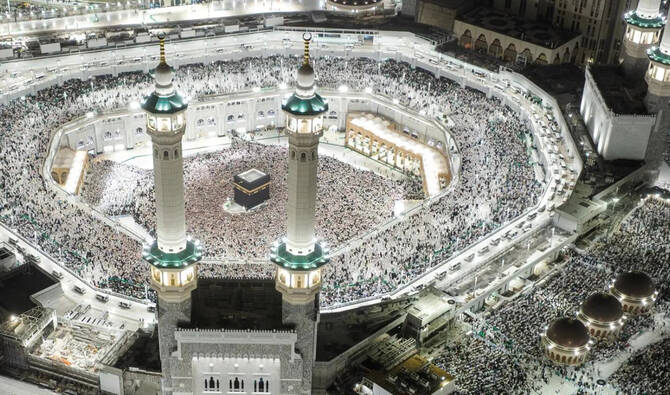


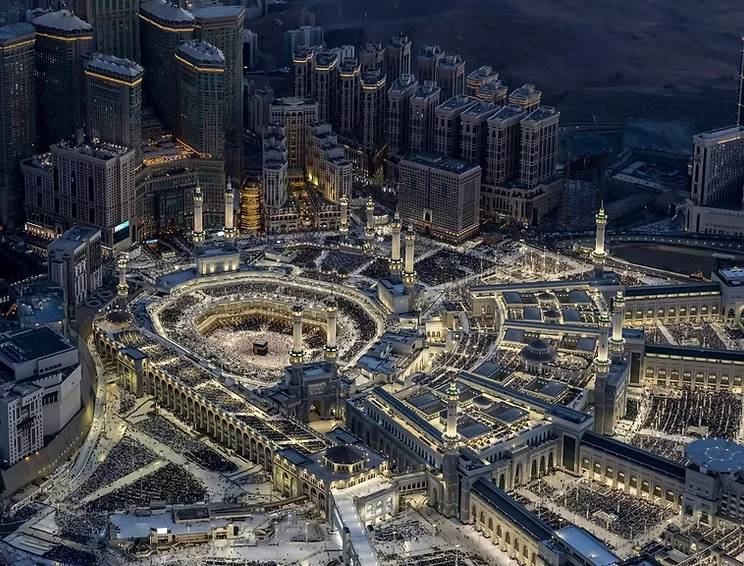
Saudi Arabia has mobilized the full weight of its institutional resources to serve the millions of worshippers and pilgrims converging on the Grand Mosque in Makkah and the Prophet’s Mosque in Madinah as the final and most sacred stretch of Ramadan — the last ten nights — gets underway. The General Authority for the Care of the Affairs of the Two Holy Mosques has activated an integrated operational plan designed to deliver seamless services across every dimension of the visitor experience.
Four-Pillar Operational Framework
The authority’s comprehensive plan is structured around four core pillars: operational services, maintenance, crowd management, and enrichment. To handle the surge of visitors that characterises Laylat al-Qadr nights — particularly nights 21, 23, 25, 27, and 29 of Ramadan — the authority has deployed Internet of Things (IoT) technology combined with colour-coded density screens that monitor crowd flow in real time and guide worshippers toward less congested areas. This system allows staff to dynamically redistribute visitor movement across the vast mosque complex, reducing bottlenecks and improving safety.
Maintenance teams have been scaled up to guarantee peak efficiency of air conditioning, lighting, and audio systems throughout the mosque. Interactive three-dimensional maps and barcode-tracking tools have been introduced to strengthen crowd management further, while a dedicated operational force remains on standby around the clock to address any technical or logistical issue that arises.
Comprehensive Services for Worshippers Observing Itikaf
Special attention has been extended to the thousands of Muslims who travel to Makkah and Madinah to observe itikaf — a period of spiritual seclusion and intensive worship — during these final days of Ramadan. The authority has allocated numbered, organised spaces inside both mosques to ensure ease of access and smooth movement through corridors. Itikaf observers benefit from personal care supplies, secure lockers for belongings, laundry facilities, sleeping amenities, and a variety of meals served throughout the day and night.
For people of determination and those with special needs, Braille copies of the Holy Quran have been made available alongside digital prayer guides and interactive audio aids, ensuring that every visitor can perform acts of worship with comfort and tranquillity. Hundreds of specialised personnel are deployed at all hours to sustain this level of care.
The Kingdom’s Enduring Commitment to the Two Holy Mosques
Saudi Arabia’s response to the surge of Ramadan visitors reflects a long-standing national commitment to serving the global Muslim community. The Kingdom’s investment in the infrastructure and services of the Two Holy Mosques — ongoing expansions, technological upgrades, and crowd management innovations — positions Makkah and Madinah as among the most visited and best-managed holy sites on earth.
During the last ten days of Ramadan, worshippers from across the Muslim world seek out the Night of Power, or Laylat al-Qadr — widely considered to fall on one of the odd nights of this period — believing it to carry the spiritual weight of a thousand months. The Grand Mosque, already home to the Kaaba and the focal point of Islamic prayer worldwide, becomes the destination of choice for those seeking the highest spiritual reward of the year.