

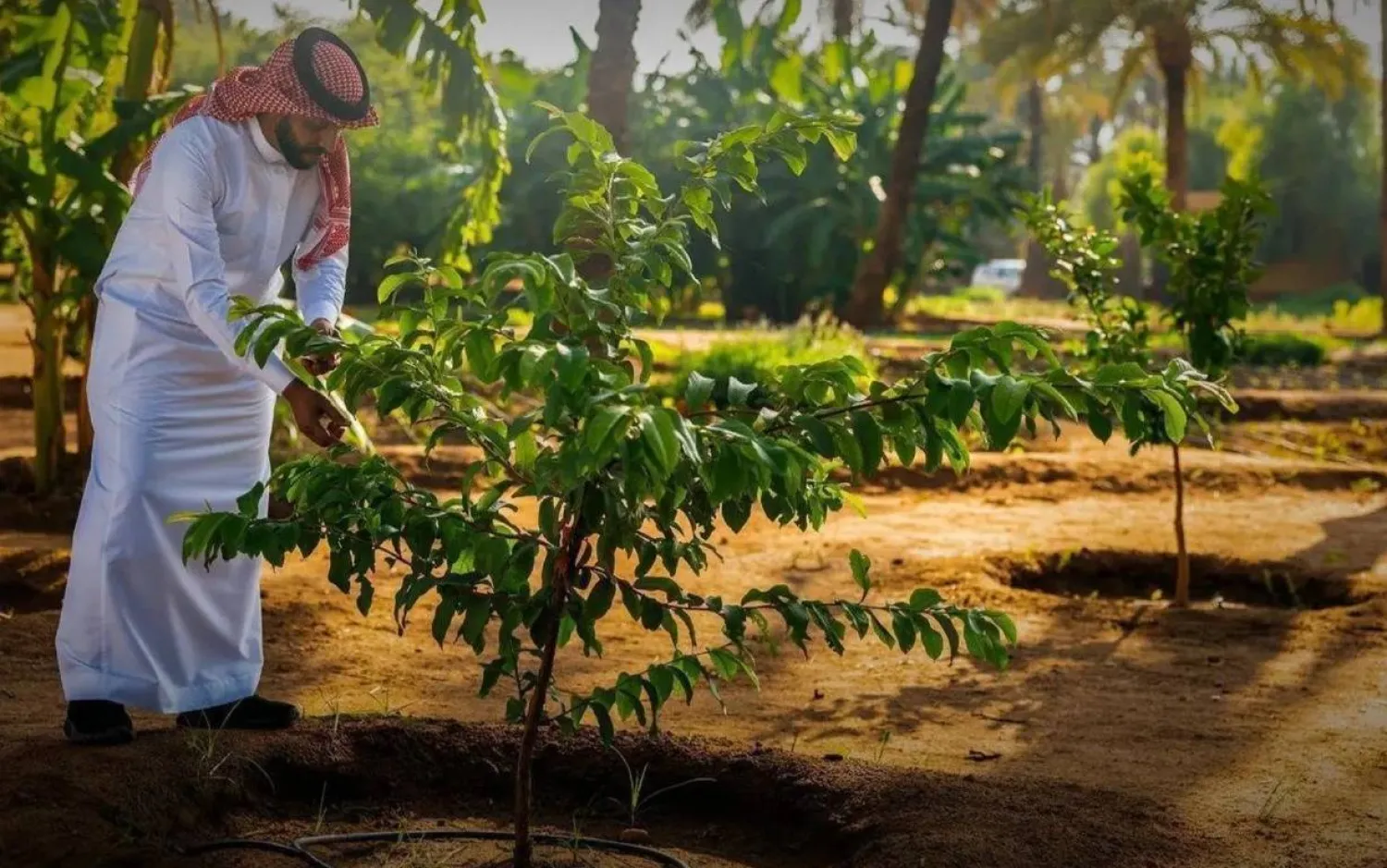
Saudi Arabia has achieved a landmark milestone in its environmental restoration journey, successfully rehabilitating one million hectares of degraded land and planting more than 159 million trees under the Saudi Green Initiative. The announcement, made on the occasion of Saudi Green Initiative Day on March 27, marks a pivotal chapter in one of the world’s most ambitious land restoration programs — and a clear signal that the kingdom’s environmental ambitions are moving from vision to measurable reality.
From Desert to Green Cover
The scale of transformation is remarkable. When the National Greening Program — the executive arm of the Saudi Green Initiative — first began operations, it was managing just 18,000 hectares of restored land. That figure expanded to 250,000 hectares by 2024 before crossing the one-million-hectare mark in early 2026, representing a trajectory driven by sustained coordination across government entities, the private sector, and local communities alike.
The Saudi Green Initiative, launched in 2021 by Crown Prince and Prime Minister Prince Mohammed bin Salman, carries far more ambitious long-term targets: planting 10 billion trees and rehabilitating 40 million hectares of land across the kingdom in total. The milestone reached this month represents the first major threshold on that long journey — with the next target set at 2.5 million hectares by 2030.
Minister of Environment, Water and Agriculture Abdulrahman Alfadley described the achievement as a direct reflection of the leadership’s commitment to environmental sustainability within the framework of Saudi Vision 2030. Vice Minister Eng. Mansour Almushaiti called it a “qualitative leap” toward the initiative’s broader goals, pointing to the role of advanced techniques including dam water utilization, rainfall harvesting, and the National Cloud Seeding Program — which contributed to a 50 percent reduction in dust storms across the kingdom in 2025 compared to the previous year.
Technology and Community in Service of the Land
The initiative’s success draws on a network of 155 projects spread across 11 operational zones, spanning afforestation, wildlife conservation, and ecosystem restoration efforts that protect biodiversity and reinforce the natural habitats of native plants and animals. Royal reserves and modern water harvesting infrastructure play a central role in sustaining these gains over the long term.
International Recognition
The achievement has drawn praise from the global environmental community. Dr. Yasmine Fouad, Executive Secretary of the United Nations Convention to Combat Desertification (UNCCD), commended Saudi Arabia’s efforts, stating that the results prove land restoration is possible even in the world’s most challenging climatic environments. She also recognized the kingdom’s broader leadership, including its hosting of COP16 of the UNCCD and its stewardship of the Middle East Green Initiative as a regional framework for environmental cooperation.