

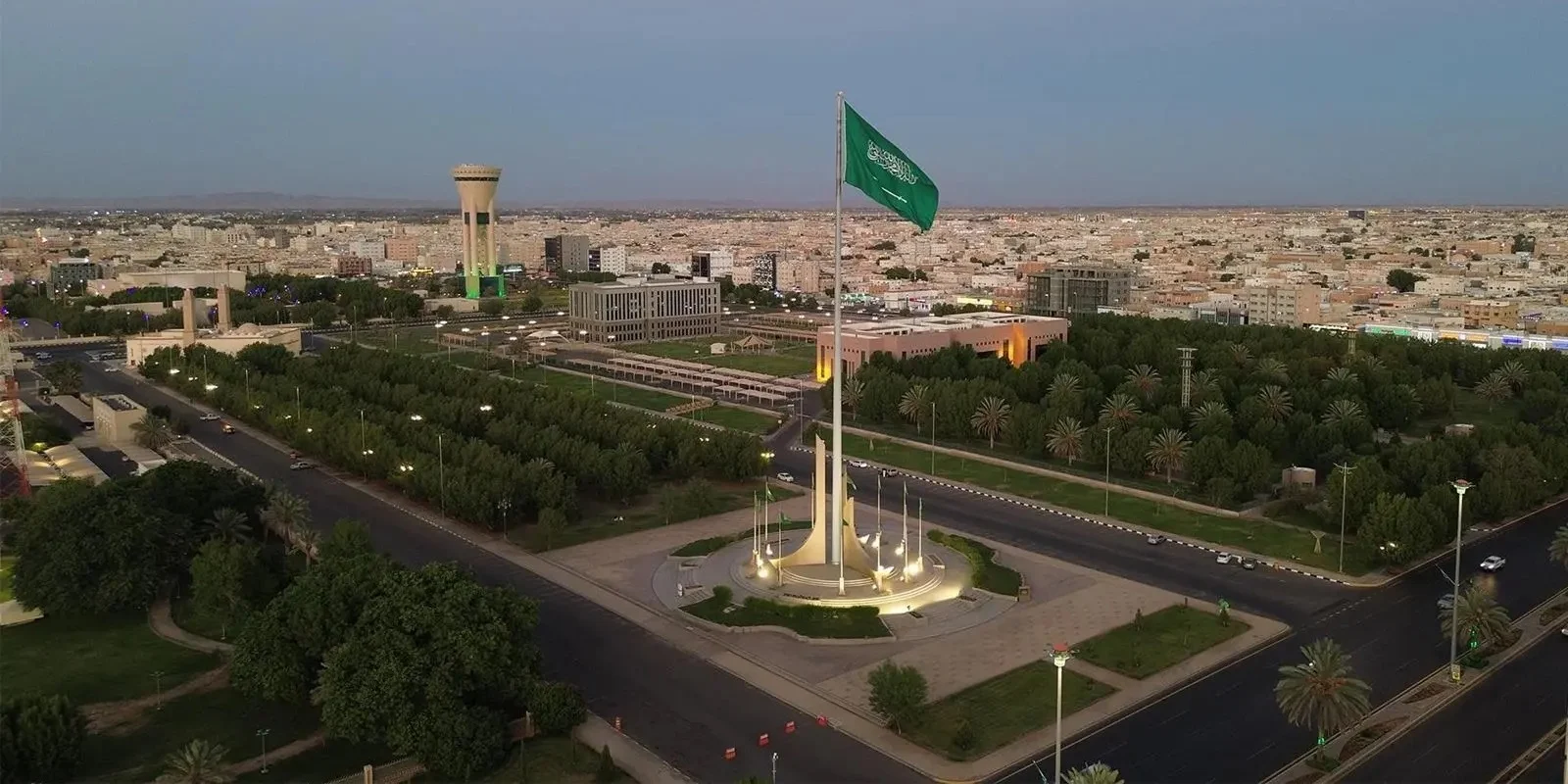
Saudi Arabia marks Flag Day on March 11 each year — an annual national occasion dedicated to the country’s distinctive green banner, which carries some of the most recognisable and historically layered symbolism of any national flag in the world. This year’s celebration comes as the Kingdom’s major cities are draped in green, with the flag displayed on government buildings, commercial establishments, vehicles, and public spaces from Riyadh to Jeddah and beyond.
Flag Day was officially established in 2023 when King Salman bin Abdulaziz issued Royal Decree No. A/303, designating March 11 as the Kingdom’s Flag Day. With this decree, Saudi Arabia added a third non-religious national occasion to its Gregorian calendar, joining Saudi National Day on September 23 and Saudi Founding Day on February 22.
The Story Behind March 11
The date carries precise historical significance. On March 11, 1937 — corresponding to 27 Dhu Al Hijja 1355 in the Islamic calendar — King Abdulaziz ibn Saud formally approved the design and proportions of the Saudi national flag as codified by the Shura Council. This act gave the Kingdom a unified symbol to represent it internationally, transforming what had been a personalised royal banner into an official national ensign recognised across the world’s diplomatic capitals.
The flag was further refined under King Faisal in 1973, when the Law of the Flag established exact proportions, specified the style of the Shahada calligraphy, and defined the precise form of the unsheathed sword beneath the inscription. In 1992, the Basic Law of Governance formally enshrined these specifications, confirming that the flag’s width equals two-thirds of its length and that it is never to be lowered at half-mast under any circumstance.
The Meaning Woven Into the Green
The Saudi flag is green — a colour with deep resonance in the Islamic tradition — bearing the Shahada in bold white Arabic calligraphy: “There is no god but Allah, Muhammad is the Messenger of Allah.” Beneath this declaration, a white unsheathed sword points to the right, representing dignity, strength, and the justice upon which the Saudi state was founded.
One of the flag’s most notable distinctions is that it is never flown at half-mast, not even during periods of national mourning. This practice reflects a considered theological position: the Shahada, as a declaration of faith, cannot be diminished or placed in a position of lowering. The flag is treated with a level of formal respect governed by specific regulations covering its display, proportions, material, and use in official settings. The official shade of the flag’s green has been codified as Pantone 330, ensuring consistency across all representations from government buildings to ceremonial flags used abroad.
A Day for National Reflection
Across the Kingdom, Flag Day is marked with educational events in schools and universities, cultural programmes at government institutions, and broad participation from citizens and residents on social media, where the occasion trends consistently each year. The official Saudi Flag Day platform invites people to engage with the flag’s story and share in a national moment of pride.
Alongside Saudi National Day and Saudi Founding Day, Flag Day completes a cycle of national reflection that runs across the calendar year — each occasion drawing attention to a distinct dimension of Saudi identity: the founding of the first Saudi state, the unification of the modern Kingdom, and now the standard that has represented the country to the world for nearly nine decades.