

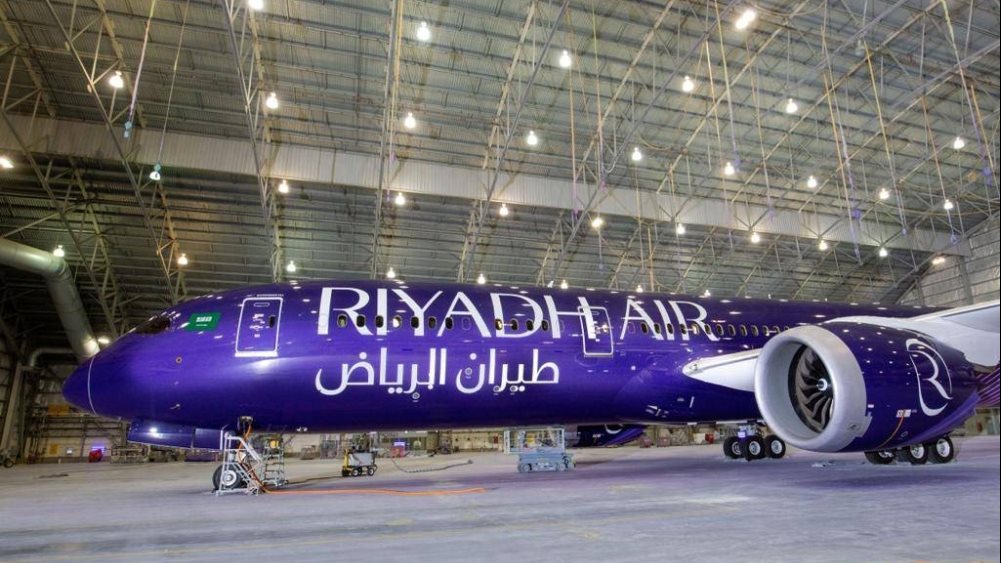
Saudi Arabia’s new national carrier Riyadh Air has filed slot requests targeting 15 international destinations for its opening commercial network, marking a concrete step toward the airline’s much-anticipated commercial launch. According to slot filings reported by Aviation Week, the initial route map spans Europe, Asia, and the Middle East — positioning the new carrier as a competitive option for long-haul and regional travel from the Saudi capital.
A 15-Destination Opening Network
The destinations named in Riyadh Air’s initial slot filings include Amman, Bangkok Suvarnabhumi, Cairo, Dubai, Islamabad, Jakarta Soekarno-Hatta, Jeddah, Kuala Lumpur, Lahore, London Heathrow, Madrid, Manchester, Manila, Mumbai, and Paris Charles de Gaulle. The selection reflects a deliberate strategy to serve markets with large communities connected to Saudi Arabia — including Pakistan, India, and Southeast Asia — while simultaneously targeting premium long-haul routes to European capitals.
The airline has built its fleet around three aircraft types: 60 Airbus A321neo aircraft for shorter regional routes, 39 Boeing 787-9 Dreamliner aircraft for medium and long-haul services, and 25 Airbus A350-1000 aircraft for high-capacity, high-frequency markets. The combination provides the flexibility to serve both high-demand short routes and premium intercontinental markets with the capacity and range needed to compete effectively against established carriers.
Positioning Riyadh as an East-West Transit Hub
Central to Riyadh Air’s commercial strategy is the ambition to position King Khalid International Airport as a major East-West transit hub, offering alternatives to established Gulf transfer points. Saudi Arabia’s geographic location — midway between Europe and Asia — gives the airline a structural advantage in capturing connecting traffic, particularly if it can offer competitive connection times and pricing.
The airline is backed by the Public Investment Fund and has been building toward its commercial debut since its founding in 2023. Chief Executive Tony Douglas previously indicated that commercial flights for the general public would begin in the first quarter of 2026, making the current slot filing activity a clear indicator that the launch timeline is on track.
What It Means for Saudi Aviation
Riyadh Air’s entry will reshape the Saudi aviation landscape, which is currently served by the national carrier Saudia and the low-cost carrier Flyadeal. The arrival of a third Saudi carrier with a long-haul international focus is expected to increase seat capacity on key routes, bringing greater competition and more travel options for passengers across the Kingdom. Combined with the ongoing expansion of Saudi airports and Vision 2030’s target of serving 330 million passengers annually by 2030, Riyadh Air represents one of the most tangible expressions of the Kingdom’s determination to become a global aviation powerhouse in the years ahead.