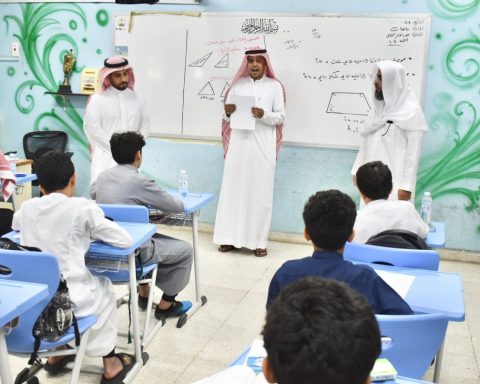

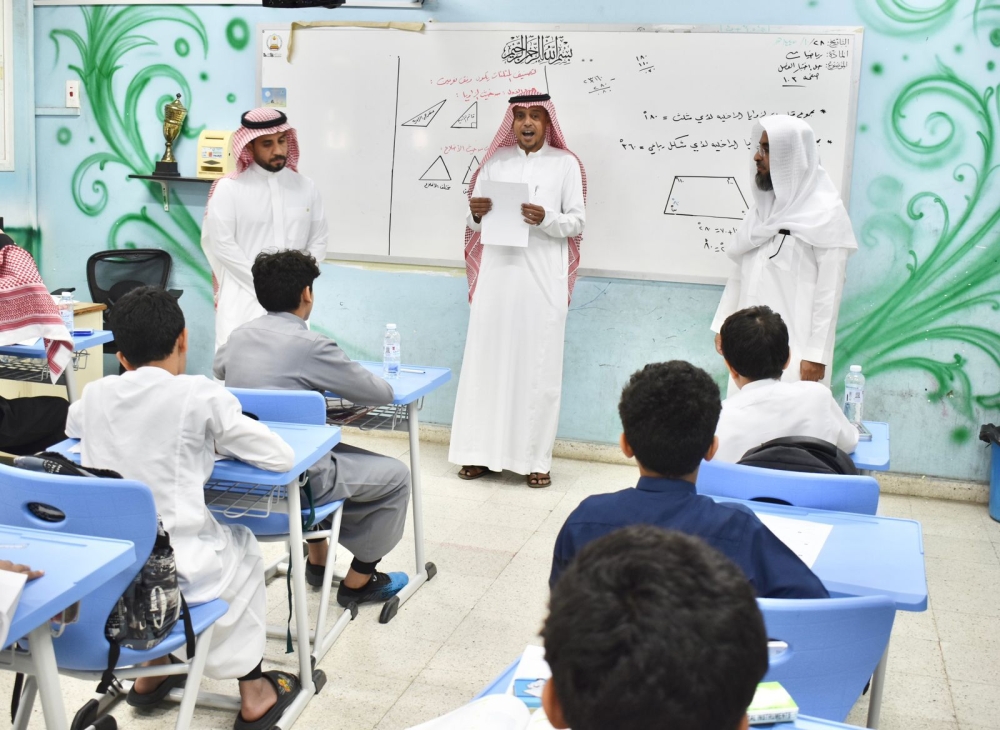
Saudi Arabia has launched its NAFIS national standardized tests for the fifth consecutive year, with more than 1.5 million students sitting examinations in public, private, and international schools across all regions of the Kingdom. Administered by the Education and Training Evaluation Authority in coordination with the Ministry of Education, the 2026 cycle runs from April 5 to April 23, covering over 28,000 schools in every part of the country.
Who Is Being Tested and What They Cover
The NAFIS assessments target students in the third and sixth grades of elementary school, as well as those in the third year of middle school. Third-grade students are evaluated in reading and mathematics, while those in the sixth grade and third year of middle school sit papers covering reading, mathematics, and science. The scope of subjects reflects an emphasis on foundational skills that are considered central to educational development at these critical stages.
This year marks the fifth successive cycle of NAFIS, a milestone that underscores the program’s evolution from a pilot initiative into a fully embedded feature of the Kingdom’s national education calendar. The consistent rollout year after year has allowed the assessments to generate longitudinal data that educators and policymakers can use to track progress over time.
Driving Quality Through Accountability
The value of NAFIS extends well beyond the testing period itself. Comprehensive performance reports are produced at the national level, the regional education directorate level, and the individual school level, providing a multi-layered view of educational outcomes across Saudi Arabia. Schools receive detailed performance scorecards, published on the Tamayoz digital platform, that allow administrators to compare their results against regional and national benchmarks.
This accountability mechanism has become a driver of improvement across the system. Schools that identify weaknesses in specific subject areas or grade levels are better positioned to introduce targeted remedial programs, while high-performing institutions can serve as models for their peers. Education officials have emphasized that the goal of NAFIS is not simply to rank schools, but to equip everyone in the education chain with the information they need to raise standards.
Aligned With Vision 2030 Human Capability Goals
The NAFIS program forms an integral part of the Human Capability Development Program, one of the twelve Vision 2030 programs designed to build a skilled, educated, and adaptable Saudi workforce. By measuring student performance against consistent national benchmarks, the tests provide measurable indicators of progress toward the Kingdom’s long-term educational targets.
The involvement of international schools alongside government and private institutions in this year’s cycle reflects a broadening of the program’s reach, ensuring that the national standard applies uniformly regardless of a school’s type or ownership. With 1.5 million young Saudi students participating this spring, NAFIS continues to play a defining role in shaping the trajectory of education in the Kingdom for years to come.