

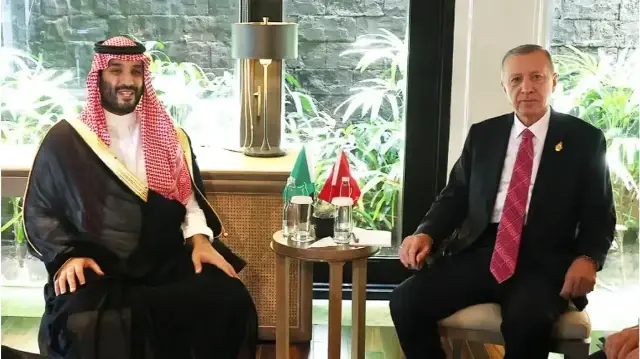
When Turkish President Recep Tayyip Erdoğan touched down in Riyadh on Tuesday, it wasn’t just a courtesy call. It was the latest chapter in a Saudi-Turkish relationship that’s been quietly — and sometimes not so quietly — reshaping itself over the past few years.
In an exclusive interview with Asharq Al-Awsat ahead of his arrival, Erdoğan described the ties between Ankara and Riyadh as “strategic for the peace, stability, and prosperity of the region.” Those aren’t throwaway words. The two nations, once at odds over regional politics, have steadily rebuilt trust and are now looking at concrete joint projects across trade, defense, energy, and logistics.
“We have never viewed this relationship through a narrow lens confined solely to bilateral matters,” Erdoğan said. “The valuable friendship between our two countries carries a strategic significance for our region as a whole.”
The visit’s agenda is heavy. Gaza tops the list, with Erdoğan pushing for a permanent ceasefire. Syria is another focal point, especially with the shifting dynamics on the ground. And then there’s Iran — perhaps the most delicate issue of all.
Erdoğan didn’t mince words about it. He said Turkey “categorically opposes a new war or a new wave of destruction” in the region and offered to mediate between Washington and Tehran. “We are ready to assume a facilitating role between Iran and the United States in order to de-escalate tensions,” he stated plainly.
It’s a bold position, and one that aligns with Riyadh’s own preference for diplomatic over military solutions in the Gulf. The fact that these conversations are happening in the Saudi capital underscores just how central the Kingdom has become to regional stability discussions.
But this visit isn’t all about geopolitics. The inclusion of Turkish business leaders in the delegation signals serious economic intent. Erdoğan emphasized potential in “energy, tourism, transportation, and logistics,” and spoke of joint production initiatives in defense that could strengthen both countries’ technological capabilities.
“What truly matters to us are sustainable and concrete projects that deliver tangible results on the ground and generate mutual benefit,” he said. “We seek initiatives that will open new horizons for our business communities, create employment, and improve the lives of our people.”
For Crown Prince Mohammed bin Salman, this deepening partnership with Turkey fits neatly into Saudi Arabia’s broader diplomatic playbook — building bridges across the region while advancing the Kingdom’s economic diversification agenda. Turkish construction firms, defense manufacturers, and tech companies bring capabilities that complement Saudi megaprojects.
The relationship between these two regional heavyweights hasn’t always been smooth. But right now, it’s moving in a direction that benefits both — and arguably the entire Middle East. Whether on Iran, Gaza, or trade corridors, Saudi-Turkish coordination is becoming something the world will need to pay attention to.