

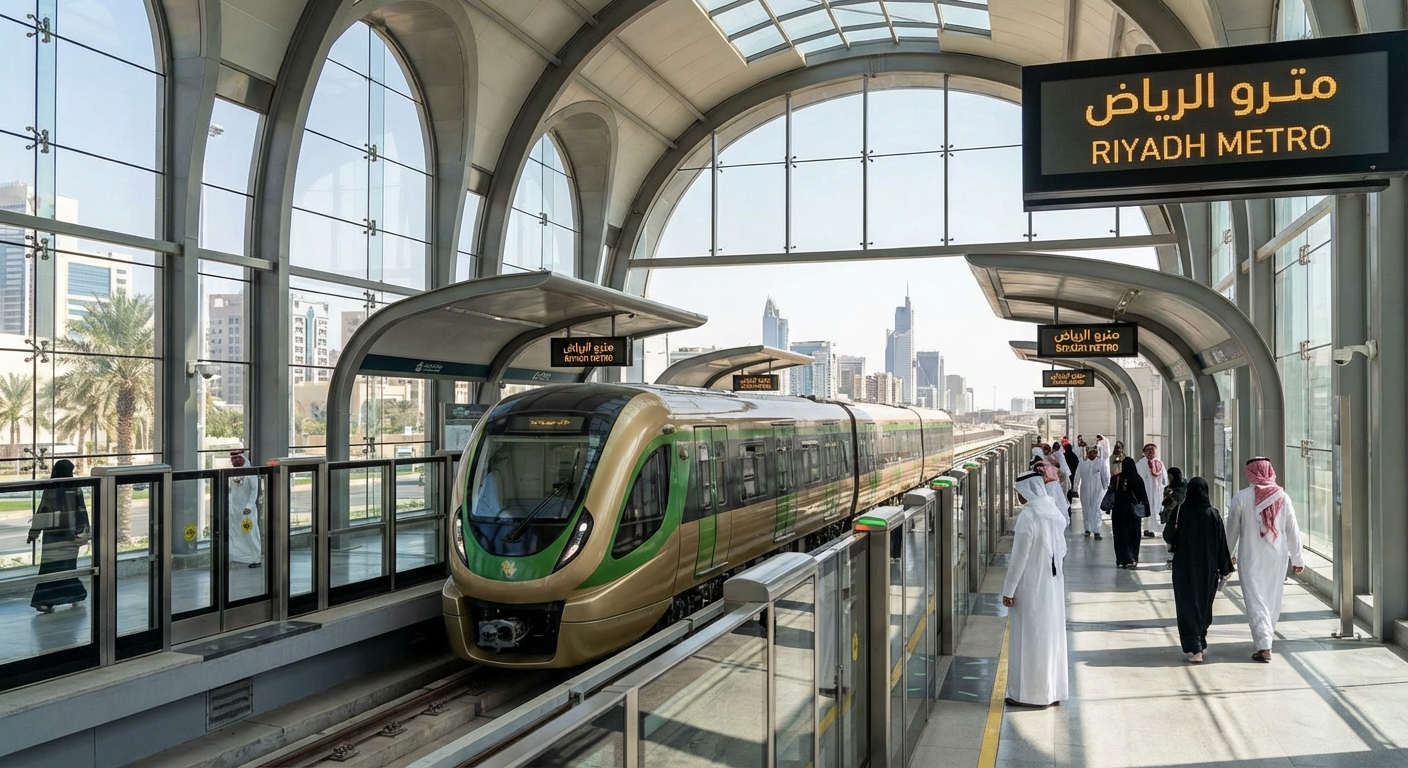
The Riyadh Metro has surpassed initial ridership forecasts during its first full year of operation, demonstrating strong public adoption of the new transit system. Daily passenger counts have grown consistently as more lines opened and service patterns stabilized.
The metro represents one of the largest urban transit projects undertaken anywhere in recent decades. Six lines totaling 176 kilometers connect major destinations across the capital, dramatically reducing travel times for millions of residents.
Changing Transportation Habits
Residents who previously relied exclusively on private vehicles have incorporated metro travel into their routines. The system’s reliability, climate-controlled stations, and competitive pricing have overcome initial skepticism about public transit in Riyadh.
Integration with bus services extends the metro’s reach beyond immediate station areas. Feeder routes bring passengers from residential neighborhoods to nearby stations, creating a comprehensive public transit network.
Economic and Environmental Benefits
Traffic congestion has eased noticeably along corridors served by the metro, with measurable reductions in travel times for remaining road users. Air quality data suggests improvements in areas with high transit adoption.
Commercial development around metro stations has accelerated, with mixed-use projects capitalizing on improved accessibility. Property values near stations have appreciated, creating wealth for landowners while expanding housing options.
The success validates the massive investment and provides a model for transit expansion in other Saudi cities.
The enthusiastic adoption of the Riyadh Metro demonstrates residents’ readiness for modern public transportation alternatives. Commuters cite convenience, time savings, and comfort as primary reasons for choosing the metro over private vehicles.
“We’re seeing a genuine shift in how people think about getting around the city,” noted a transport authority official. “The metro isn’t just transportation; it’s changing urban lifestyle patterns.”
The system’s success has prompted discussions about accelerating expansion plans and improving integration with bus services and other transport options. Environmental benefits from reduced car usage are also being measured and celebrated.