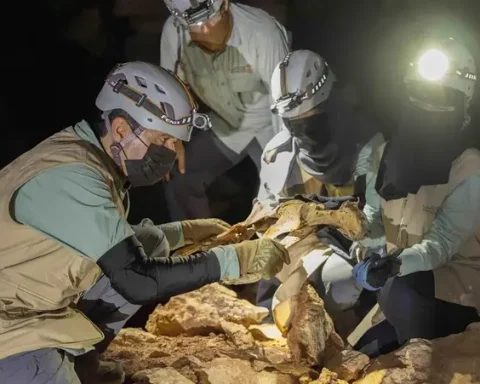


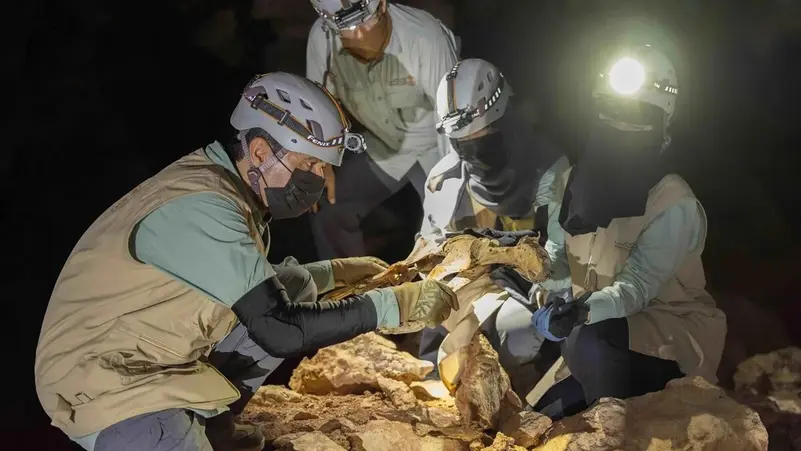
Researchers in Saudi Arabia have announced a remarkable scientific breakthrough with the discovery of the first naturally mummified leopards found inside caves in the Kingdom, marking a rare find that sheds new light on the region’s environmental and wildlife history.
The discovery is considered extremely rare on a global scale, as the leopard remains were preserved naturally without human intervention. Unique cave conditions—such as stable temperatures, low humidity, and limited exposure to external elements—played a key role in slowing decomposition and maintaining the remains over extended periods.
This finding represents a significant contribution to biodiversity research in Saudi Arabia, providing tangible evidence that leopards once inhabited broader areas of the region than previously documented. It also offers valuable insights into past ecosystems, climate conditions, and wildlife distribution across the Arabian Peninsula.
The preserved remains give scientists an exceptional opportunity to study the physical structure of the leopards, analyze dietary patterns, and potentially determine the historical timeframe in which they lived. Further laboratory analyses, including dating techniques and DNA studies, are expected to deepen understanding of the species and its environment.
The discovery highlights the scientific importance of Saudi Arabia’s caves as natural archives of ecological history, underscoring the need for continued exploration, research, and protection of these sites, which hold invaluable clues to the Kingdom’s ancient wildlife and environmental heritage.