

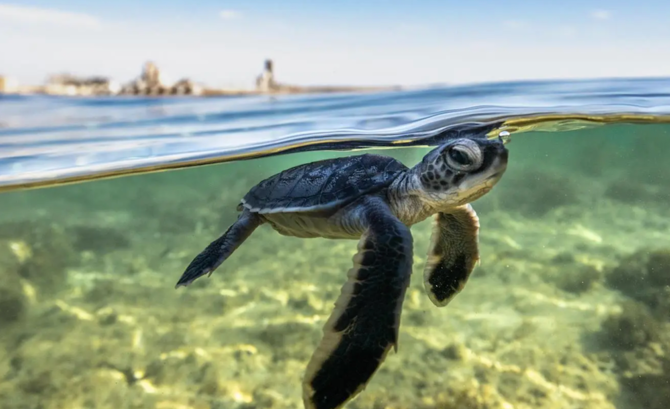
A royal conservation reserve in the Kingdom has unveiled a new environmental program that uses satellite-based monitoring to study and protect endangered turtle species inhabiting the Red Sea. The initiative represents a significant leap forward in marine conservation, enabling experts to track these creatures with unprecedented accuracy.
Through the program, selected turtles are equipped with specially designed satellite tags that gather detailed information on their daily movements, migration pathways, feeding grounds, and nesting areas. These insights help scientists pinpoint the most critical zones for survival and understand how the turtles interact with their surrounding environment.
The technology also allows conservation teams to identify emerging threats — from habitat disruption and climate-related shifts to human activities such as overfishing and marine pollution. With this data, the reserve can develop targeted protection strategies and ensure timely interventions when needed.
Beyond its scientific value, the initiative seeks to increase public engagement by sharing findings with educational institutions and coastal communities, encouraging broader participation in safeguarding marine wildlife.
This project is part of the Kingdom’s wider commitment to preserving natural ecosystems and protecting vulnerable species. It reflects a long-term vision that prioritizes environmental sustainability and the restoration of biodiversity in the Red Sea.